Blog

Transform your gym
in 5 minutes a day.

Get the no-BS morning newsletter read by 30,000 gym owners.

How To Sell Online Coaching

Want to see a great ad for online coaching? Look at this:    Most fitness coaches will see this ad, watch the video, and go, “That’s weak.” “I could do so much better!” “Man, that dude’s range of motion / poor reps / postural alignment is terrible!”   Almost all fitness coaches see the ad and think: “I could do better.”   Here’s why they won’t.   When a fitness coach thinks about selling their amazing programming online, they think about attracting an audience to their programming. They don’t think about solving an audience’s problems. And that’s backward.   I chose the ad above because it solves a problem for a narrow niche audience. Cyclists know they *should* be doing some strength training, but they don’t know what to do. And even though the video demos were clearly shot in a CrossFit-style gym, the program owners never say “cyclists should do CrossFit.” Instead, they say “here’s how to be a better cyclist.” Because that’s all cyclists care about.   The coaches at Dynamic Cyclist understand how to place a “lens” over their knowledge. Here’s how to do it: Identify your smallest viable audience. Find ONE person you can help. Solve their specific needs. It’s best if this is a 1:1 client you train in person. Then duplicate that solution and sell it at scale. For example, if you train a collegiate-level basketball player, measure the metrics they care about, and then scale the program to a larger audience.   Go narrow and deep. Selling programming for CrossFit gyms has become very competitive. And selling the same program to everyone makes your product a commodity, which means it’s subject to downward price pressure. While the best systems (like BoxProgramming.com) are worth over $200 per month, most “gym programming” platforms charge $49 per month or LESS. And they provide full class templates and coaching cues. To make that project worthwhile, you have ...
Read More →

Certification

We’re Certifying our mentors now. Here’s why.   It’s very easy to call yourself a business consultant. Anyone can do it. Just like the term “Personal Trainer”: there’s no legal differentiation within the field. In fitness, insurance companies are the only filters; unless you have a certification, you’re not insurable. In fitness, the line for “certification” is pretty low. But in business, we can keep the standard high. Why? Because we’re setting it.   Introducing the Two-Brain Business Mentor Certification.   Our mentors go through a rigorous selection process. Here’s the criteria they must meet before going before a selection panel.   When they’re accepted into our training program, they go through a very long and thorough training period.   Before they graduate, they demonstrate expertise in helping gym owners focus; take action; and track their success. Our mentors draw on their long experience as owners and stand on our foundation of proven systems and data. Certified Two-Brain mentors are the living embodiment of knowledge and empathy.   Building a Certification process meant that an outside underwriter had to agree that we were worth backing. They spent a few months going through everything on our site before they were willing to take the risk. Their conclusion: we can back our mentorship with evidence and data. We’re not just guessing here. We make gyms profitable, and we can prove it.   No one else has ever taken this step to separate wheat from chaff. It’s too hard and too expensive. But gym owners deserve clarity: a hard line between tips and professional guidance.   What does it take to become a Certifying agency? A proven method of delivery (our Incubator is step-by-step) Proven, data-based curriculum from a broad sample size (over 700 gyms now) A quality control program (we have a full-time QC team to maintain our standard of excellence) A rigorous training protocol for new mentors An ongoing continuing education ...
Read More →

The Parachute Problem

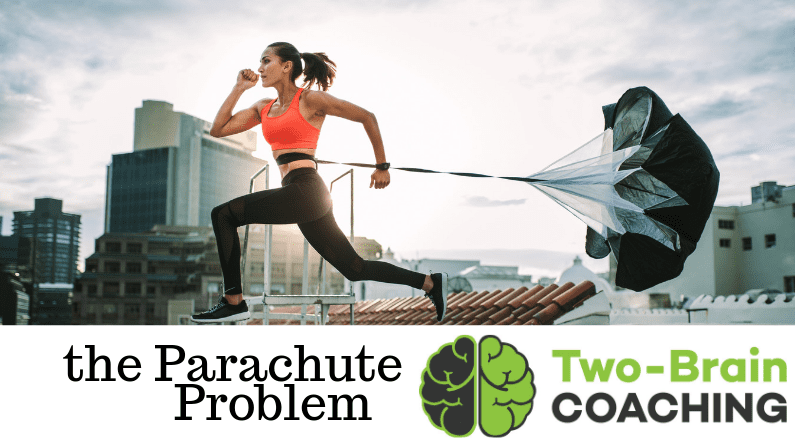
My kid needs to get faster on the ice. Do you train with parachutes? I used to train a lot of hockey players. Every year in early April, I’d start taking calls from hockey parents. The parents always “knew a little bit” about exercise. They read Men’s Health or saw commercials, and were attracted to trends in fitness. So they’d ask questions like these: “Will this training really work his core?” (2003) “I need her to improve her balance” (2005) “Her foot speed needs to go up” (2009) “Are you doing those poly-metric things?” (2011) “Do you use those new parachutes?” (2014)… In my early days as a coach, I’d spend up to an hour arguing with the parents. Most of the time, they promised to call me back. Then I’d see their kid running with a parachute at the track. Another coach would be holding a clipboard and cashing their check. I knew I could get the kid better results without the parachute sprints. But if they were training with another coach, I couldn’t help them at all. I was torn between buying flashy toys and sticking with what worked–and many coaches suffer from that same angst. Here’s what to do about it. Consistency gets results. Novelty gets clients. How do you balance the two? Well, here’s how our brains work: Dopamine and serotonin make us happy. Dopamine is secreted when your brain encounters something novel; and serotonin is secreted when you’re successful at something. The recipe for dopamine + serotonin secretion is to combine exercises that create these feelings: “This is new!” and “I am good at this!” This is the secret recipe behind CrossFit’s success. It’s the reason many would-be CrossFitters have gone to Orange Theory; the reason Zwift is king of online training; the reason Strava is the biggest fitness app in the world. It’s also the reason Candy Crush is so addictive: quick wins and ...
Read More →
The black and gold Two-Brain Radio podcast logo.

Two-Brain Marketing Episode 12: Rob Olson

Mateo: 00:03 Hey, it’s Mateo Lopez of Two-Brain Marketing, and on this edition of the Two-Brain Marketing podcast I’m talking to Rob from CrossFit Simsbury. You’re going to hear about their specialty programs and how he and his wife, Denise, were able to completely sell out their Diapers and Dumbbells program for new moms. You’re also gonna learn about how they were able to take $300 in advertising spend and turn it into $4,000 in new-member revenue. Make sure to subscribe to Two-Brain Radio for more marketing tips and secrets each week. Greg: 00:29 Two-Brain Radio is brought to you by Two-Brain Business. We make gyms `profitable. We’re going to bring you the very best tips, tactics, interviews in the business world each week to find out how we can help you create your Perfect Day, book a free call with a mentor at twobrainbusiness.com. Chris: 00:47 I linked up with Matt several months ago at Forever Fierce, and he had some fantastic ideas and so he and I have put together a couple of packages that we think are really gonna help CrossFit affiliates everywhere. Two-Brain mentoring clients use Matt almost exclusively. He’s got fantastic designs and he takes all the work out of it. All that time that you spend searching the internet and Pinterest and junk like that for great CrossFit T-shirts, you don’t have to do that anymore. Matt has designs for you. You can put your logo on one of his templates, which are fantastic, and your clients will never know the difference. It saves you so much time that you could be using on other things like real marketing. He’ll also go so far as to remind you when it’s time to reorder. He’ll give you suggested order sizes, he’ll help you set up preorders so you’re not even fronting the cash for the inventory. It’s all amazing stuff built to help affiliates and ...
Read More →

…But You Must Be Friendly.

Yesterday, I wrote that “Your Clients Are Not Your Friends.” It’s a lesson that many of us have had to learn slowly, painfully, and repeatedly.   Many veteran gym owners weighed in with their own stories. But some  also shared the other side of the coin:   “You still have to be friendly to everyone.”   Your gym attracts people by promising to solve their fitness problem. It keeps people through operational excellence (your systems) and strong relationships (the 1:1 coaching relationship, and the relationship with your other members.) Some call the latter their “community”.   All of those relationships flow from your example.   If you greet everyone with a smile, they’ll turn around and greet the next person with a smile.   If you hover behind a desk with your hood pulled up, and point people at the whiteboard to warm up on their own; or show up late, looking tired; or punish people who are two minutes late for class–well, they’ll just go and have a better experience somewhere else. Giving a client the best hour of their day means pulling them out of their funk, breaking through their boredom and cheering them up.   No one quits a gym because their coach doesn’t know enough. But plenty of people switch gyms because their coach is tired, or cranky, or not engaged. Hell, I don’t want to spend time around negative people either.   If you’re tired in the mornings, do the right thing for your clients: bring a bubbly part timer who will shout “GOOD MORNING!!” from the rooftops at 6am. If your days are long, replace yourself in the evenings. Find a part-time coach who’s not tired; not stressed; not distracted. (Read: The Case for Part-Time Coaches here).   Many Microgyms don’t survive. When they fail, it’s never because the owner lacked education. It’s almost never because the owner didn’t care enough. But it’s often ...
Read More →

No, They’re Not Your Friends.

Your clients are not your friends. How much do you pay people to hang out with them? I pay $0. They pay me $0. Many of my friends come to my gym. They pay full price. Because that’s a separate relationship: it’s a professional relationship. In a professional relationship, one person pays the other some money. That’s called a transaction. They don’t pay with smiles, and they don’t get a discount because we got drunk together in high school. That’s called a–well, there are different names. I like “gong show”, but my teenager would call it a “dumpster fire”. Here are the most common–and the most painful!–mistakes entrepreneurs make when they sign up their friends:  They believe in some kind of “emotional bank account”. Trust me: you might be keeping score, but your clients aren’t. If you’ve been open for at least 3 years, I’m sure you’ve been dumbfounded by a client’s emotional outburst over a rate increase or late opening time. “But…we hosted that fundraiser for her brother last year!” They give “friends and family discounts” when they’re launching their business. When you’re starting out, the only people you know are your friends and family–who else is going to join your gym? And if they care about you, they don’t need a discount. My best friends wouldn’t take a discount if I tried to force it on them. They say “we’re in the relationship business, not the fitness business!” Nobody joined your gym to strengthen your bond or to make new friends. That might come later, but make no mistake: they joined because they thought you could help them with their fitness. That’s why they pay you money. Your relationship is a business relationship. They expect a tit-for-tat. “Oh, Mary won’t mind if I leave our session to answer the phone, because we’re friends.” But Mary isn’t weighing her free sessions or discount shakes against your absence. She’s thinking, “A ringing phone is more ...
Read More →