Blog

Transform your gym
in 5 minutes a day.

Get the no-BS morning newsletter read by 30,000 gym owners.

The black and gold Two-Brain Radio podcast logo.

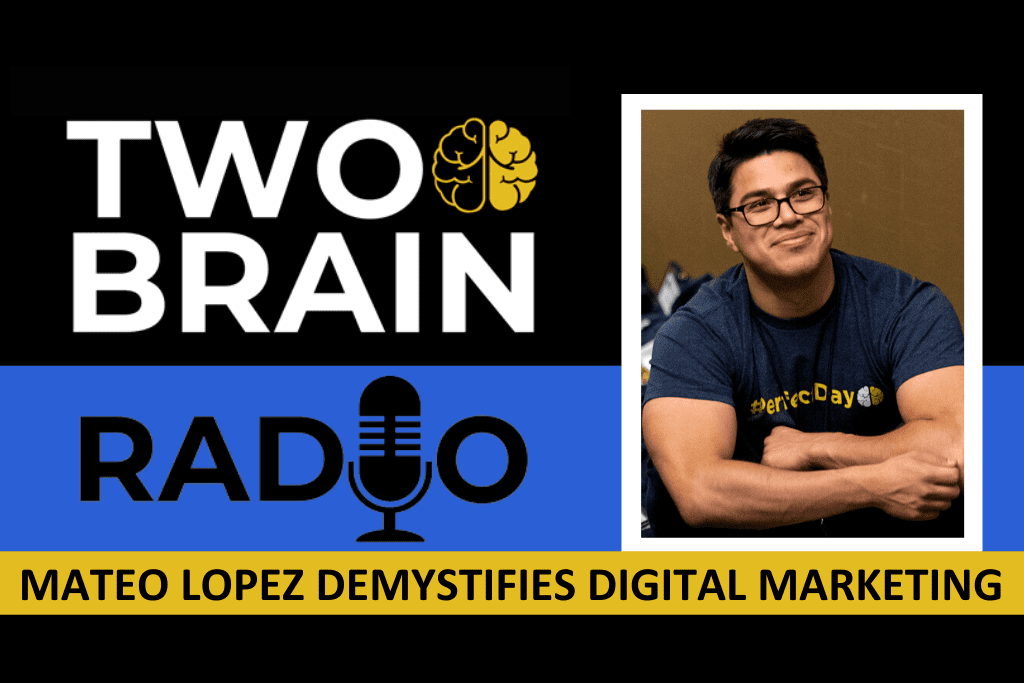
Two Brain Radio: How Jill Glasenapp Turned $650 Into $8,400 Through Advertising

Mateo: 00:00 – Hey, it’s Mateo Lopez of Two-Brain Marketing. On this edition of the Two-Brain Marketing podcast, I’m talking with Jill Glasenapp of Cobra Command CrossFit. You’ll learn about her transition from being a coach to buying in as a full-fledged partner in the business. You’ll also learn about her advertising system and how in the last eight weeks, she spent $650 on ads and generated $8,400 in front-end revenue, so you don’t want to miss this. Make sure to subscribe to Two-Brain Radio for more marketing tips and secrets each week. Greg: 00:32 – Two-Brain Radio is brought to you by Two-Brain Business. We make gyms profitable. We’re going to bring you the very best tips, tactics, interviews in the business world each week. To find out how we can help you create your Perfect Day, book a free call with a mentor at twobrainbusiness.com. Chris: 00:48 – What makes a good gym website? The answer to that question keeps changing. Five years ago I would’ve said that you need this rotating banner image. Three years ago I would’ve said you have to have one splash page highlighting the benefits of your service. That’s true. The problem is that the benefits of your service change by the client you’re trying to target and so you need to be able to adapt. You need to be able to add your own landing pages. Your main cover page should reflect what your most important clients want. That’s going to be different from what my most important clients want. So a website that’s based on a template with the same kind of rotating image is not going to work anymore. I use For Time Design for the twobrainbusiness.com and Catalyst gym websites because those are the most important websites I own. I want responsive design that’s going to work well on mobile. About 60% of your clients are going to come ...
Read More →
On a black background, a white cloud of steam shoots out the side of a silver pot full of boiling water.

The Release Valve

Maybe, as a gym owner, exercise is your release valve. But more and more gym owners admit that working out in their gyms adds to their stress instead of relieves it. I want to tell you: It's OK to work out somewhere else.
Read More →
Two wooden signs pointing opposite ways on a beach, one labeled "panic" and one labeled "calm."

The Panic Vaccine

It’s the 28th of the month. You don’t have enough for the rent. You just remembered your insurance is due. And this is a three-pay month … . Anxiety is your cardio now. You live in constant fear of “what’s going to happen next?” because you’re stuck in a meteor shower, and you know that any little hit could be your last. You’re overwhelmed, overworked, and just kinda over it. That’s panic. And data is the vaccine.   What Data Does   Data tells you, “Here’s how other gym owners got through this same situation.” Data tells you, “Next month will be better.” Data tells you, “Here’s how to stop this from ever happening again.” Data is the laser beam that blasts the falling rocks out of the sky before they get close to you. Data is clarity. Data is a look into the future. Data is absolutely critical to the success of your business. So why isn’t there any data in the fitness business? Because, until now, no one would collect it, analyze it and report on it.   Data and Duty   Big chain gyms collect tons of data about their customers’ spending habits. They know when they’re busy. They create budgets around peak seasons. They know when to boost their ad spend, when to hire and when a client is about to leave. But they don’t share. Franchisors collect data on their franchisees but don’t give that data back for analysis because it’s their intellectual property. Gathering data is very hard and very expensive, and they want to keep it in the mothership. And licensors, like CrossFit, don’t collect data at all because they charge too little to pay for that level of business support. When I visited CrossFit HQ last year, I asked the question over breakfast: “What if you tracked data for all of your gyms and just released it for anyone to analyze?” The ...
Read More →
In blue water, a goldfish wearing a shark mask comes face to face with a gray shark wearing a goldfish mask.

Impostor Syndrome

“Who am I to lead them?” As a business grows, it adds staff. Ironically, this can leave the Founder feeling even more isolated. By the time she reaches Tinker Phase, an entrepreneur can feel very alone even with a big team supporting her.Promoted beyond the point of her own expertise, the Tinker tries to wrap her head around larger challenges than she’s ever faced. Each decision takes on great importance because it affects a larger team. And she’s dealing with sums of money she’s never seen let alone controlled. It’s very common for a Tinker to feel as if she’s woken up in someone else’s job. “How did I get here?” she asks. “Why me? I’m no more qualified than they are.” That’s the impostor syndrome. (Not sure if you’re a Founder, Farmer, Tinker or Thief? Take the test here.) Beating Impostor Syndrome  Nearly every Tinker I’ve ever mentored has reported having impostor syndrome—even the alpha folks who own gyms.At some point, even the most self-confident owner has wondered, “How did this all fall into my hands?”Here’s how to beat it.  1. Realize You Don’t Have to Be Perfect You only have to be slightly ahead of those you lead—and not always on a technical level. Your job as Founder is to be well rounded. But good hiring means that you replace yourself with “pointy” people: those folks with a deep (but narrow) field of expertise. They’re specialists. You’re a generalist. If you know more than your tech-support team, they need more instruction. Your job isn’t to be the best shoemaker anymore. It’s to motivate and calm the team, tell them inspirational stories, and provide a vision for the future.  2. Fake It Till You Make It One of the benefits of joining higher-level mentoring groups is that you have to do the stuff they do. When everyone else in the room is a millionaire, you spend the weekend doing ...
Read More →
A colored flow chart showing how mentorship and planning create a trickle-down effect in a business.

Mentors and Consultants

Consultants solve problems in a vacuum. Mentors see the whole picture. I’ve hired consultants before. Whenever I have a small problem that exists in a vacuum, I’ll call in a consultant to help me with a quick fix. Consultants are good at coming up with ideas; some consultants do team exercises. Those are fun. But I call myself a mentor—and not a consultant—for a reason.   Saved by a Mentor   If you know my story, then you know that a mentor saved my business. A consultant wouldn’t have. See, I thought I needed marketing help. But Denis, my first mentor, knew that I actually needed to build the systems that would build the team that would sell my service before I even thought about marketing. That’s what a mentor does. A consultant would have said: “Spend your last $500 on newspaper ads.” And I’d have been out of business back in 2009 if I had. I’ve had three mentors since: Dan Martell, Marcy Swenson, and now Todd Herman. None of these people gave me silver bullets. But they all gave me clarity: Instead of piling new ideas on top of my overwhelm, they stripped everything away to find the one thing that would really move my business forward. And I’ve scaled 28 times since Two-Brain’s first year, largely due to the mentorship I receive. Consultants should cost up to $5,000, and your relationship with them will typically last a day or two. But I pay over $80,000 per year for mentorship, and our conversations last for years.   The Best Path   We are a mentorship practice for one reason: we care enough to give gym owners the best. And mentorship is the best: All the seminars, videos and masterminds are helpful, but only when built into a bigger plan. Our Incubator program is a 12-week sprint through the systems that will build and grow your business. Our Growth ...
Read More →
The black and gold Two-Brain Radio podcast logo.

Two-Brain Radio: Converting More Clients With John Franklin and Mateo Lopez

Greg: 00:00 – It’s Greg Strauch of Two-Brain Media and on this week’s episode we get to hear from John Franklin and Mateo Lopez. You guys have heard Mateo on here on Marketing Mondays, but this is talking about converting more clients. This was originally recorded at the Two-Brain Summit of 2019. They dive into topics of lifetime value of a client, true cost of getting a new client and the true secret to getting rich quick. Make sure to subscribe to Two-Brain Radio to hear the very best tips, ideas and topics to move you and your business closer to wealth. Two-Brain Radio is brought to you by Two-Brain Business. We make gyms profitable. We’re going to bring you the very best tips, tactics, interviews in the business world each week. To find out how we can help you create your Perfect Day, book a free call with a mentor at twobrainbusiness.com. Chris: 00:55 – One of my favorite finds has been foreverfierce.com. I linked up with Matt several months ago at Forever Fierce and he had some fantastic ideas, and so he and I have put together a couple of packages that we think are really going to help CrossFit affiliates everywhere. Two-Brain mentoring clients use Matt almost exclusively. He’s got fantastic designs and he takes all the work out of it. All that time that you spend searching the internet and Pinterest and junk like that for great CrossFit T-shirts? You don’t have to do that anymore. Matt has designs for you. You can put your logo on one of his templates, which are fantastic, and your clients will never know the difference. It saves you so much time that you could be using on other things like real marketing. He’ll also go so far as to remind you when it’s time to reorder. He’ll give you suggested order sizes, he’ll help you set up pre-orders so ...
Read More →