Blog

Transform your gym
in 5 minutes a day.

Get the no-BS morning newsletter read by 30,000 gym owners.

How Sharing Joy Makes You Happy

Your mom told you, “‘Tis better to give than to receive.” I’m going to give you something better than anything you can buy. On the day North America goes nuts buying things, I’m giving you a promise: Things don’t make you happy (you knew that part already.) Actions DO. Service will make you happy. But happiness is gold, buried in the mine of your other emotions. You have to go looking for it and hold it up to the light. While we, in North America, wait in lines to consume things, I’m going to give you something that will definitely make you happy: a weekly practice of mining happiness in your brain. It’s not Black Friday. It’s Bright Spots Friday. Every week in the private Two-Brain Facebook group (you can’t join until you’ve finished RampUp), we practice happiness. Hundreds of gym owners will share their “bright spots” for the week: wins in their gym and their personal lives. The purpose is twofold: 1. We all get to read hundreds (literally hundreds) of great ideas from other gym owners every week. 2. In the act of thinking about “What worked well this week?” we take five minutes to reflect on the things that made us happy. And guess what? The act of looking for happiness makes us find it! I can’t tell you how many times I’ve heard this: “I didn’t think I had any Bright Spots this week until I went looking for them.” We also practice Bright Spots in the private Catalyst Facebook Group, and it’s equally powerful. You can’t keep people in your gym until you let them into your heart. I’m very careful about protecting the borders of both groups, because that’s what you do when you love people: you keep their space safe. So I won’t share any of their Bright Spots with you. Instead, I’ll share mine: “BSF: This is coach Miranda. She injured her ankle on a run last week. Rather than ...
Read More →

Let's Get Real or Let's Not Play

I remember when I was young enough to know everything.   I was 100% sure that my way was the ONLY way. I thought that MY experience should be the same as everyone else. I knew that what I liked was what others would like, too.   I opened my gym thinking dozens of local powerlifters would want coaching. They did not. My first website was dark and scary. I thought all the hardcore athletes in town would want to do CrossFit. They did not. I tried to attract local firefighters by criticizing P90X–which they were all doing at the firehouse. I thought they’d see the light because of my infallible logic and science. They did not.   Eventually, I got tired of making bad guesses about what other people wanted, and started asking them. I’ve refined the technique now, and we teach it in the Incubator: which questions to ask your coaches, clients and spouse to find out what they REALLY want from you.   Most of us opened a gym because we wanted to coach. A year later, we might have wanted something else. But we made guesses about our clients based mostly on what WE wanted, or what worked for US.   I like training in a group. Many of my clients don’t. That’s fine.   Some people prefer a private introduction to CrossFit. Some people do not. That’s fine.   The answer depends on the client. And that’s why so many real experts in ANY field, when asked a question, will answer with, “That depends…”   The only ones who are ever absolutely sure that their opinion is correct to the exclusion of everything else are the newcomers. The evangelists for one training style, or one business “best practice” are usually the newcomers. They’re also usually the loudest, because they’re so assured of their conviction that they’re comfortable shouting it from the rooftops. Data? Not necessary. ...
Read More →

How To Deal With Your Competition

The nearest box is 800m away. They charge less. They copy EVERYTHING you do–right down to your color scheme. What do you DO about it? Don’t turn to arson yet…there are several reasons to be EXCITED about competition, including this one: they’re not hard to beat.   First, the problems, and the opportunities that come with them: People quit your gym to go to their gym because it’s a lower price. The reason is that the average consumer can’t tell the difference between what YOU sell and what THEY sell, so they choose based on price. This is the definition of “commodity”. If I’m selling vanilla ice cream, and you’re selling vanilla ice cream, I’m going to choose the cheapest. Being slightly better isn’t enough. Even if you have some sprinkles on your ice cream, I might not choose it; I’ll have to decide if it’s worth an extra .25 to have vanilla ice cream with sprinkles. The opportunity: be REALLY different. Don’t do free trials; do consultations. Build in a unique measurement system (we use an InBody, which no one else can afford.) Start with nutrition instead of thrusters. There are a hundred ways to slice this, but start here: you sell fitness. CrossFit is your biggest tool. Group classes might be part of your delivery of fitness (or not.) They’re too close. The reason the other gym built close to you isn’t because they wanted to be up in your grill–it’s because you have the best spot, and they want to be in the best spot too. In this case, the opportunity is to be the best gym. They’re doing you a favor by teaching people in your area to LOVE CrossFit, and then asking them to run by the door of a better CrossFit gym every day on their warmup. They’re basically running an OnRamp for you, and if done right, they’ll keep all the troublesome clients ...
Read More →

How To Turn Your Life Into a Disney Movie

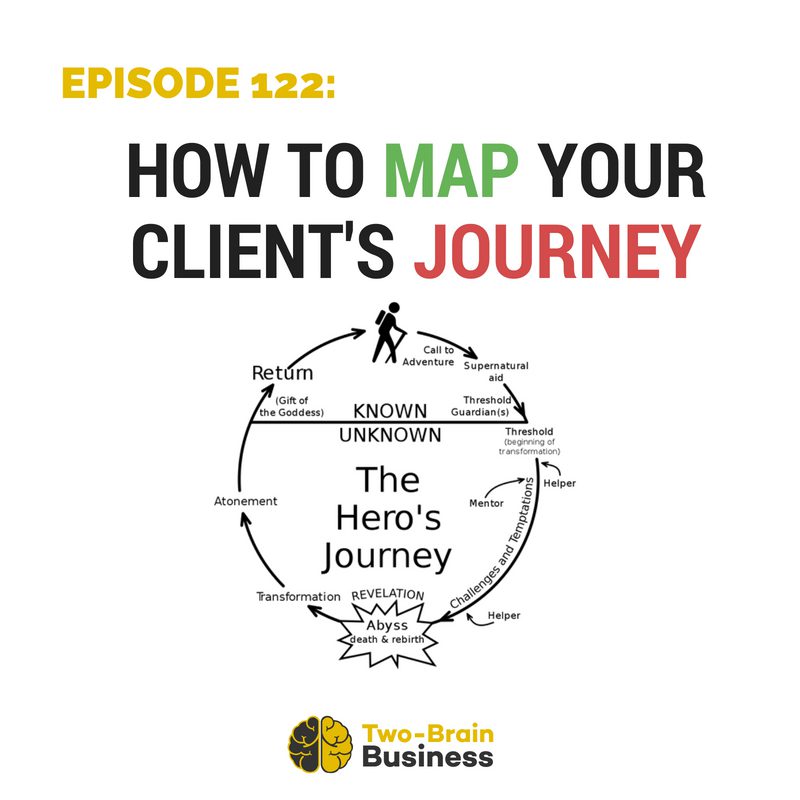
You’ve heard of Walt Disney, of course.   You know many of the Disney stories–the Little Mermaid, Beauty and the Beast, The Lion King, Aladdin…   You probably also know that many weren’t written by Disney. But that doesn’t matter. What matters is this:   Every Disney story is the same.   Every single Disney story follows the same script. The characters have different names; the funny sidekicks have different bodies and songs. But the plot follows one course every time. It’s called The Hero’s Journey. Here it is:   This is the “Hero’s Journey” as described by Joseph Campbell, a mythologist who died in 1987.   In his book, Campbell used the examples of classic myths and religious stories. You can download a version with updated examples from The Wizard of Oz, The Hobbit, the Lion Kin and Star Wars here.   And you can also live the adventure through entrepreneurship.   The call to our adventure is simply the gorgeous opportunity to be our own boss. CrossFit makes that remarkably simple for thousands of first-time entrepreneurs. I felt forced to take the leap because I couldn’t make enough money as a personal trainer, so I opened a gym.   Supernatural Aid is the boost we receive from something other than our doing. In CrossFit, that’s brand recognition (the first ten people through your doors after you hung your sign were drawn by the name.) In my case, a partner lent me $16,000 to buy equipment.   That’s when I left the “ordinary world” of employee and became a business owner…kinda. I really bought myself a job. My “threshold moment” came on a park bench when I realized I was doing it wrong; that I really didn’t know how to build a business; and that my family was suffering because my ego told me I’d just eventually “figure it out.”   Enter: the Mentor.   My first mentor was ...
Read More →

Love + Letters

It’s been incredible to watch the TwoBrain family embrace the philosophy of “Love Letters” over the last few months. They’re getting new members, higher affinity from their current members, and more joy from entrepreneurship.   You can’t get people into your business if you won’t let people into your life.   If you haven’t heard the term “love letters” before, that’s okay. You’re already familiar with them (you’re reading one now.) Love letters are simply notes to your audience about the things THEY care about. They’re helpful tips, answers to questions and intimate details of YOUR story.   They’re not “newsletters”.   They’re definitely not “sales letters”.   I write my love letters to YOU as answers to questions I receive from other gym owners. Every week, 10 of you book a free consultation to the TwoBrainBusiness site. We chat for half an hour. Sometimes I invite you to join our mentorship family, and sometimes I don’t. But the questions are always good, and I always know that OTHERS have the same questions.   So I answer them here. The best love letters I’ve written came from the best questions I was asked.   For example:   “Why I’m Headed to CrossFit HQ” “How Many ‘Likes’ Do You Need?” “How to Say ‘No’ To Discounts” “Why You’ll Never Need 300 Members” “How To Optimize Your Day” …and literally hundreds more.   Last week on a podcast interview, I was asked, “What’s the most important piece of content you’ve produced? Which one made the biggest impact?”   A better question would have been: “What YEAR of writing was your best?”   I wrote over 390 blog posts on DontBuyAds.com. Then I wrote Two-Brain Business.   I had over 300 posts on 321GoProject. They’re gone. But most of them came from Two-Brain Business 2.0 and Help First.   I have over 400 blog posts on TwoBrainBusiness.com (and just over 20 on the ...
Read More →

What is Excellence in Coaching?

Yesterday, I wrote, What IS Excellence?  and promised to follow up with a specific example of measuring excellence in the gym business. Below, you’ll find a sample Coach Evaluation Form from UpCoach. This isn’t a simple “scale of 1 to 10”, but part of a larger conversation. The first part of the conversation with your coach should be: “What’s your perfect day?” Then follow with, “If you could coach one thing all day, what would it be?” Finally, help the coach draw a road map from their perfect coaching day to where they are NOW. That’s where the evaluation comes in: it’s a snapshot of their starting line. Quarterly Evaluation Form UpCoach Coach Evaluation The first two are followed by a “Coaching Inventory” and then a specific assessment of the coaches’ strengths and weaknesses in weightlifting, gymnastics, endurance etc. It’s important to understand that Professionalism, Group Management, and Attitude all come before specific knowledge. These are GENERAL skills, which are more important than SPECIFIC skills. Specific skills can be taught over a weekend; general skills take years (maybe a lifetime) to develop. The traditional 1-10 scale is less relevant for general skills, because a coach can sit at a 7/10 in “Presence” forever, and be satisfied. It’s better to rate them as “Excellent”, “Good” or “Satisfactory” because these subjective skills don’t easily lend themselves to objective measurement. The key question: why be anything LESS than excellent? Usually, a coach is less than excellent simply because they don’t have a clear picture of excellence. Their idea of “excellent” is different from your own, and probably for good reason: you’ve been coaching longer, you’ve seen REAL excellence, and you know what clients expect. They don’t. The first sheet clearly spells out the expectations associated with an excellent coach. The second sheet is a simple ratings scale. Use it for followup evaluations if you like. But always make sure you’ve clearly defined “excellence” ...
Read More →