Is small-group training the way forward?
I wrote about small-group personal training (SGPT) and semi-private training more in 2025 than I ever have. That’s not because I have a vested interest in the success of SGPT. Most of our 1,000 gyms are big-group-training gyms.
However, sometimes numbers can illuminate the way forward.
Consider these stats from our 2025 “State of the Industry” report (get it free here):
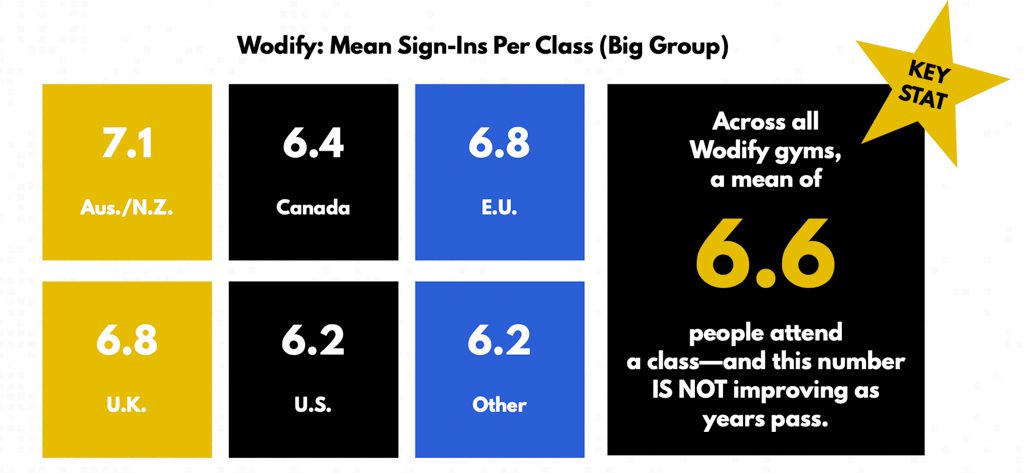
- Most gyms only have 6.6 people attending a “group class” anyway.
- SGPT clients pay nearly $100 more per month than big-group members do (Page 30).
- It’s not harder to sell SGPT (look at the leads and close rates on pages 20 and 25).
- SGPT gyms have far fewer expenses—look at Page 54.
As a result, staff earn more (Page 50) and the owners do, too (check out the medians on Page 60). - SGPT gyms have fewer clients to manage and chase when they don’t show up (Page 16), and that leads to better retention and less time spent marketing to replace the clients who churn out.
- Retention with four to six people is better than it is with a group of 13, too.
In short: I’m not trying to prove that SGPT or semi-private training is better than big-group training. Instead, I’m following the data—and I hope you do, too.
Because coaching is an art, but business is a science.
SGPT in Practice
Anecdotally, I’ll share a few things.
If you’re a CrossFit gym, the “original” model for CrossFit was semi-private training, then that became SGPT.
First, founder Greg Glassman paired his 1:1 clients up, and then he put three to five together into a group and had everyone do the same workout together. He charged PT rates (not $15 per class) and kept people on memberships. A few others were doing this back in 1999, but not many.
If I’d known this in 2008, I would have altered my business model from 1:1 to semi-private, kept my costs low and doubled my income.
Instead, I opened a big location, I tried to attract 300 members by any means necessary (low prices, discounts, etc.), I traded memberships for coaching hours because I couldn’t afford to pay trainers, and I made all the other mistakes I see others making.
The landlord made more money, the government made more money, the bank made more money, and I starved.
I also had high coach churn because they didn’t want to take the same vow of poverty that I had taken.
When I realized that I was actually hurting my family by working too much for too little, I found a mentor and saved my gym. It took four years to fix the mistakes I’d made in the first four days of being open.
If I’d had this data in 2009, I would have changed my model faster and saved myself years of pain. If I’d had this data in 2008, I would have avoided most of the pain altogether. But nobody was tracking this stuff—let alone publishing it—then.
When I finally added semi-private training to my gym two years ago, my clients loved it, my coaches made more money in less time, and the whole culture of my gym was reignited.
I love being in my gym again—mostly as a client. I hate to use cliches, but it really was a game changer.
If you want to learn how to add SGPT or semi-private training to your gym, or if you’re not sure what the difference between them is, or if you want to think through changing your model, you need a mentor.
These big changes require a careful plan and coaching to get you to the other side.
To talk about that, book a call with my team here.