You’re sitting across from a prospect. The consultation went well. You presented the price. And then it comes:
“I need to think about it.”
Most gym owners say “sure, take your time,” shake hands and watch that person walk out the door forever.
But “I need to think about it” almost never means they need to think about it. It’s a surface-level objection. It’s a smokescreen. And if you respond to the smoke instead of the fire underneath it, you’re going to lose sales you could have closed.
Why Gym Owners Cave
When an objection shows up, gym owners usually let the prospect leave to “think about it.” Or if it’s a price objection, they discount on the spot.
Both are mistakes, and both come from the same place: They don’t want to seem pushy.
But think about what you’re actually doing when you let someone walk away to think about it. That’s exactly what they’ve been doing for the last year. They’ve been “thinking about it” while getting sicker, heavier and more frustrated. If you let them leave without a decision, you’re letting them continue the exact pattern that brought them into your gym in the first place.
And discounting isn’t kindness either. If you cut the price because someone hesitated, you’re not holding them to the standard that gets results. You’re also telling every other member who’s paying full price that the price was never really the price.
Your job in that room isn’t to “sell.” It’s to coach someone into the commitment they came in hoping you’d help them make. Prospects walk through your door because some part of them wants a coach who won’t let them talk themselves out of it.
The PULSE Framework
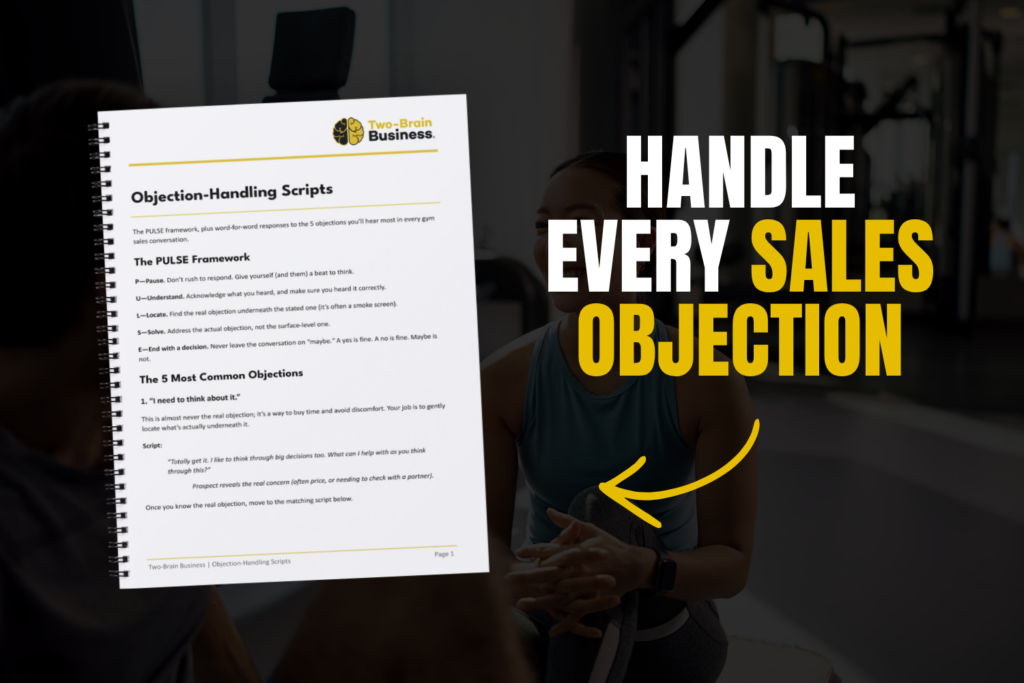
When an objection comes up, run it through PULSE:
- Pause. Give yourself (and them) a second to think.
- Understand. Repeat back what you heard so you know you’ve got it right.
- Locate. Find the real objection hiding underneath the stated one.
- Solve. Address the actual issue, not the smokescreen.
- End with a decision. Not a maybe. A yes or a no.
That’s the framework. Below, I’ll walk through how it plays out against the four objections you’ll hear most. If you want the exact word-for-word scripts for each of these, grab our free objection-handling scripts here.
The Big Four Objections (And How to Handle Them)
“I need to think about it.”
This is rarely the real objection. It’s a stall tactic to avoid discomfort. When you hear it, don’t accept it at face value. Ask directly: “Totally get it. I like to think through big decisions too. What can I help with as you think through this?”
That question alone will usually surface what’s actually going on, whether it’s money, a spouse or fear that this program won’t work any better than the last one.
The spousal objection.
If you paid attention during your consultation, you already saw this coming. If a prospect mentioned their spouse “doesn’t mind” how they look or “doesn’t care” about the gym, expect this objection later.
When it shows up, confirm the goal is real and shared: “I’ve got a spouse too. I’d want to loop them in on a decision like this. Are they supportive of you reaching your goal?”
If the answer is yes, propose the obvious solution: Sign up today, take a week to talk it over, and if it’s not a fit, tear up the agreement and part as friends.
Remove the risk that’s actually stopping them.
The price objection.
Price objections are where gym owners do the most damage to their own business, because they assume the prospect’s budget and downsell before they even hear a number. Don’t do that. Present the best option for their goal first.
If they push back on price, offer a payment structure before you offer a discount. If it’s still not in their budget, move to a genuinely different tier (for example, semi-private instead of one-on-one) rather than slashing the price of the program you already presented. Instead of compromising on value, find the right container for their budget.
The delay objection (“let me start after summer,” “I’m too busy right now.”)
This is everybody, every day. Don’t take it personally, and don’t let it end the conversation.
Reframe around flexibility: workouts they can do while traveling, connections to gyms near wherever they’ll be, programming that travels with them. Show them that busy doesn’t have to mean “not now.”
Objection Handling Isn’t a Personality Trait
You don’t need to be a naturally gifted closer to get good at this. There are only a handful of objections. That means you can practice every single one of them until your response is automatic instead of something you’re fumbling for in the moment.
The best closers actually handle most objections before they ever get voiced—during the consultation itself, by asking the right questions upfront. But even the best salesperson will still hit an “I need to think about it” now and then because some people are simply wired to be indecisive. That’s just part of the job.
If closing sales (or charging what your programming is actually worth) is something you struggle with, you’re not alone. It’s one of the most common issues we hear from gym owners, and it’s one of the first things we work on inside Two-Brain mentorship. We rebuild your sales process from the ground up, and you role-play real objections with your mentor until responding to them feels automatic instead of terrifying.
If that’s something you want help with, book a call with our team.