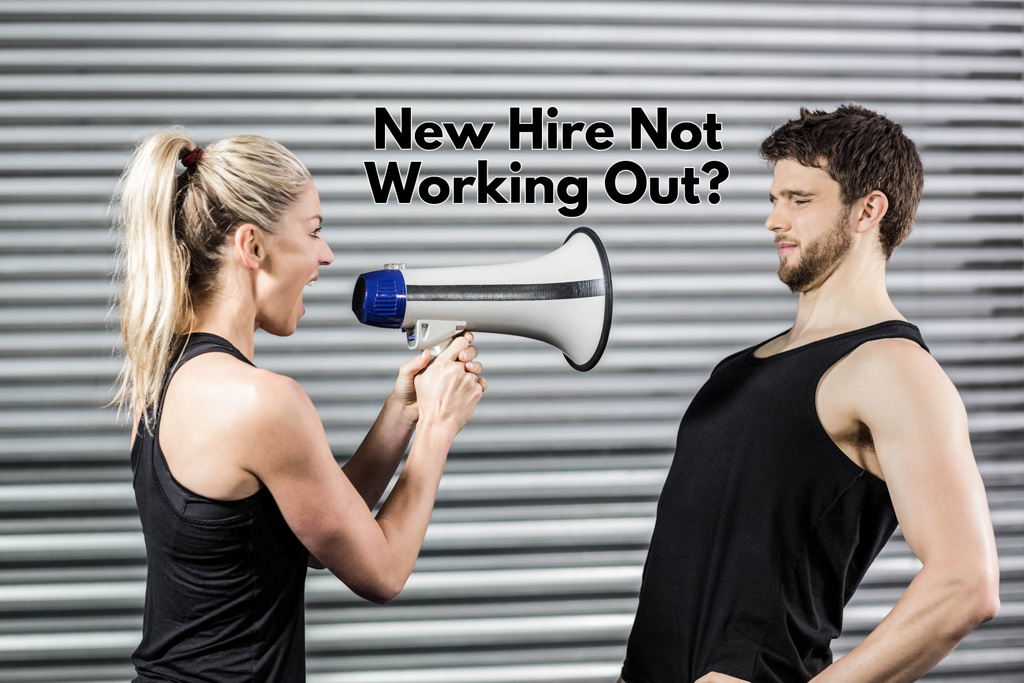
Here’s one of the biggest mistakes gym owners make when hiring:
They try to clone themselves instead of building a team.
You’re buried. You’re coaching every session, cleaning bathrooms, answering emails at midnight. So you finally hire a coach to buy back some time—and then you micromanage them, which adds more to your plate.
You watch every class. You correct every detail. You run a six-month “internship.”
My staff used to call it “the Eye of Sauron”—it’s the constant surveillance and micromanagement they must deal with because they aren’t doing things exactly how you do them.
Eventually, the new coach burns out and quits.
And you repeat the process, always wondering why staffing never stabilizes. Eventually, you start marching out old lines such as “good help is hard to find” and “if you want it done right, do it yourself.”
Here’s the truth:
Your clients don’t care that much about technical knowledge and certifications.
They care about how they feel when they walk through the door.
They want a warm welcome.
They want someone who lifts their mood after a bad day.
They want a coach who celebrates their wins and actually listens.
They’re not buying perfect squat mechanics.
They’re buying the feeling they get when they show up and put effort into a workout when they’d rather flop on the coach and complain about the boss.
That’s why the most successful fitness professionals often seem more like cheerleaders than technical masters with doctorates. This is especially true in gyms with scripted workouts, written warmups and clear class structure. In that environment, personality matters more than skill.
You can train skill.
You cannot fix a bad personality.
Where to Find Coaches With Great Personalities
So where do you find “the right people”?
Start inside your own gym.
Once or twice a year, run an “advanced theory course”—an eight-week Saturday program that lets members see what’s “on the other side of the clipboard.”
Make it clear: This isn’t a hiring process. It’s an opportunity to learn. That key distinction prevents bad feelings if you choose not to add any participants to your staff.
If you run an “internship program,” you run the risk of having to tell a valued member, “No, you can’t coach here.” The result: anger, shame and often departures.
In a properly crafted advanced theory course, participants present, coach each other and engage. At the end, you graduate the group—and quietly approach the natural leaders and the people who show up every week, smile and lift the room just by being there.
That creates a pipeline of future staff.
If that doesn’t work, look outside your gym:
- Ask clients who they’ve trained with before and liked.
- Book sessions with those trainers.
- Offer a better opportunity.
If you still need people, go to local colleges—any department, not just exercise science—and ask who the most upbeat, people-oriented students are.
Job boards are your last resort. Resumes show credentials, not energy.

The Energy and Attitude Assessment (Take It Yourself First)
I’ve created a tool to help you evaluate people you are considering for client-facing roles. To get my one-page Energy and Attitude Assessment, send me a DM through our Gym Owners United group.
Before you assess anyone else, assess yourself—honestly.
Most gym owners are tired and stressed but think they’re hiding it. They’re not. And if the owner isn’t happy, nobody is happy.
Yes, I know this because I let my own stress affect client interactions.
They came for energy and I told them motivation is “not my problem.” I deeply regret doing that, and when I realized how I was behaving, I acted quickly to replace myself in coaching roles to improve the client experience.
So use my assessment on yourself. You’ll rate yourself from 1 to 5 on things like:
- Smiling and making eye contact.
- Being excited about others’ success.
- Showing up energized.
- Listening without making it about you.
- Celebrating people.
If you score low, that’s not a failure—it’s a signal.
If the evaluation reveals that you’re burned out, your business is paying the price.
Here’s the fix:
1. Replace yourself in the first and last classes of the day. Sleep more. Get home for dinner. Your martyrdom is not impressive. Showing up early and angry is worse than not being there.
2. Create a pre-coaching ritual. You are a professional performer. Treat yourself like one. You need a reset before class. You can’t roll in stressed and expect to produce positive energy.
3. Protect your time off. No checking the gym cameras to “see what’s going on.” No late-night texts. No email. Burned-out owners are ineffective everywhere, so reclaim your time.
4. Invest in your own recovery. Your energy is the product of your recovery. Make sure you are rebuilding yourself mentally and physically every day so you can give your best when you’re interacting with staff and clients.
You can’t run a good gym angry.
You can’t build community while resentful.
You can’t lead people while burned out.
Your energy flows to your staff, then to your clients.
That’s why we say “fix the owner, fix the business.”
The same rules apply to your staff. Cranky technical wizards can poison the entire business. Disengaged coaches who check Facebook during the morning class kill retention. Overtrained, self-invested part-time coaches who snap at clients while badly running the noon class have to go.
Use my assessment on your staff, then use the scoring tool to take action and fix the problem. Use the assessment with every prospective employee, too.
Skill Is Easy. Personality Is Not.
We can train coaching skill in weeks.
We cannot train for genuine care, joy or connection that fast. And some people can never acquire these traits.
Your coaches should always show up ready to host a “daily birthday party” for your clients. Your members need—and deserve—enthusiasm, high fives and celebration of small wins. They should have 60 minutes of uninterrupted positivity and investment.
That happens if you hire for personality and train for skill.
For 90% of gyms serving 90% of people, personality wins every time.
Here’s the takeaway:
Stop trying to hire a clone of yourself. Instead, hire somebody who brings positive energy to your clients. Backfill technical skills—that part is easy.
Start your search inside your gym by running an advanced theory course twice a year, then expand your search outside your gym.
Use my assessment—request it here—with every potential hire, but assess yourself first. If you’re burned out and it’s showing, no hire is going to fix your gym. You must fix yourself first.
Remember this: Your clients aren’t buying technical perfection. They aren’t buying movement skills. They’re buying the good feeling they get when they walk through your door and someone greets them by name with real enthusiasm.
They’re buying connection, they’re buying energy and excitement, and they’re buying somebody who cares.
Hire people who can give them that feeling. Then teach them the technical stuff.
That’s the path to a team that will keep clients training long enough to get the life-changing results your service can provide.