
If you removed your gym’s name and logo from your website and social media right now, would a stranger instantly know what makes you different?
For most gym owners, the honest answer is no.
In 2026, if your online presence looks exactly like every other gym in your market, you might as well be invisible.
What “Standing Out” Actually Looks Like
The gyms that stand out online deliver a specific promise to a specific type of person.
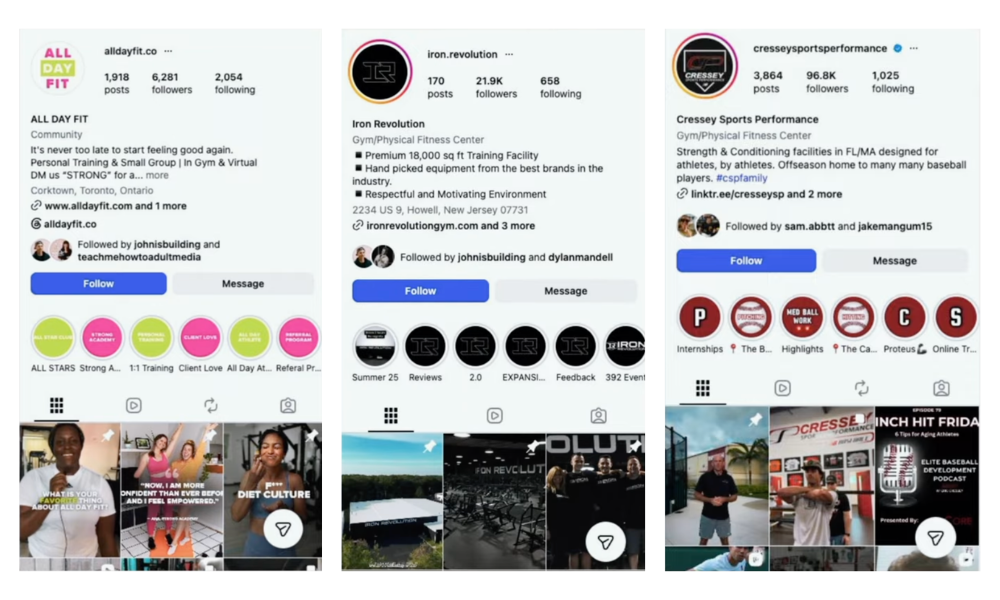
Take Cassie Day at All Day Fit. Her gym is built around underrepresented women in fitness—women of different ages, shapes and sizes who want to feel strong and confident through personal training. When a woman who’s been avoiding the gym for two years lands on Cassie’s Instagram, she sees herself. She reads reviews from people saying things like, “I came back to the gym two years postpartum, and it blew my mind.” She doesn’t comparison-shop; she signs up.
Or consider Ray Fennell at Iron Revolution, a bodybuilding and powerlifting gym in New Jersey. Ray’s entire identity is built around hunting down rare, vintage equipment, fully refurbishing it and bringing it into his gym. His content is videos of him explaining each new piece—the history, the craftsmanship and how it feels to train on. If you care about the quality of your lat pulldown machine, you will drive past four other gyms to train at Ray’s. YouTubers travel from across the country to make videos at his gym.
And then there’s Eric Cressey of Cressey Sports Performance, who built his reputation one shoulder injury at a time—specifically, shoulder injuries in baseball players. He published content on that single topic until injured baseball players started seeking him out from hundreds of miles away. He got so big that a nearby town offered him a custom facility and baseball fields because of the economic impact of the professional players he was drawing in.
These gyms serve someone specific, promise something specific and showcase it relentlessly in their online presence.
Step 1: Get Clear on Who You Actually Serve
The most common mistake gym owners make is trying to be for everybody.
Ask a struggling gym owner who their ideal client is, and you’ll hear something like: “Anyone in our area between 16 and 65 who wants to lose weight, get stronger, feel better or avoid injury.”
That’s not a target audience.
Haylin Alpert at Core Principles Personal Training only speaks to people over 50 who want a personal trainer. If you’re 60 years old browsing the internet and you see Halen’s website versus a gym showing 30-year-olds doing box jumps, there’s no contest. Halen wins that client every time.
You don’t have to stop serving other people. You just need to speak clearly to one person. The imagery and language that resonates with a 20-year-old is completely different from what resonates with a 55-year-old. Pick one, and speak directly to them.
Step 2: Simplify Your Offering
Once you know who you’re serving, simplify what you’re selling.
Imagine you’re in a new city looking for sushi. Two restaurants come up, both with 4.8 stars and 200 reviews. One is a sushi restaurant. The other says it’s the best sushi and pizza in town. You’re going to the sushi-only place. Every time.
The same logic applies to your gym. Ultimate Performance positions itself as the global benchmark for personal training and nothing else. This simplicity signals quality, and the gym attracts people who need results and are willing to pay more to get them.
Think of In-N-Out Burger: only four items on the menu, and they’ve always got a line around the block.
Step 3: Create Consistency Across All Three Touchpoints
In 2026, this is how most people actually find your gym:
They Google “gym near me.” They click the first three results that show up.
First, they check the gym’s Google Business Profile—the basic info, reviews and images. This is their first impression of your space and your clientele. Make sure the photos show the type of people you want to attract doing the type of training you want to sell.
Second, they visit the gym’s website. Whatever your GBP promises, your website should immediately confirm. Serving women? Women should be front and center. Focused on personal training? That should be the headline.
Third, they creep on your Instagram. This is where they check if you’re real—if there are results, energy and a community worth joining. Your pinned posts matter more than most gym owners realize. A three-post sequence works well: who you are, what you do and the result you deliver, and how to get started.
If all three touchpoints tell the same story, you become the obvious choice for the person you’re speaking to.
Step 4: Show Undeniable Proof
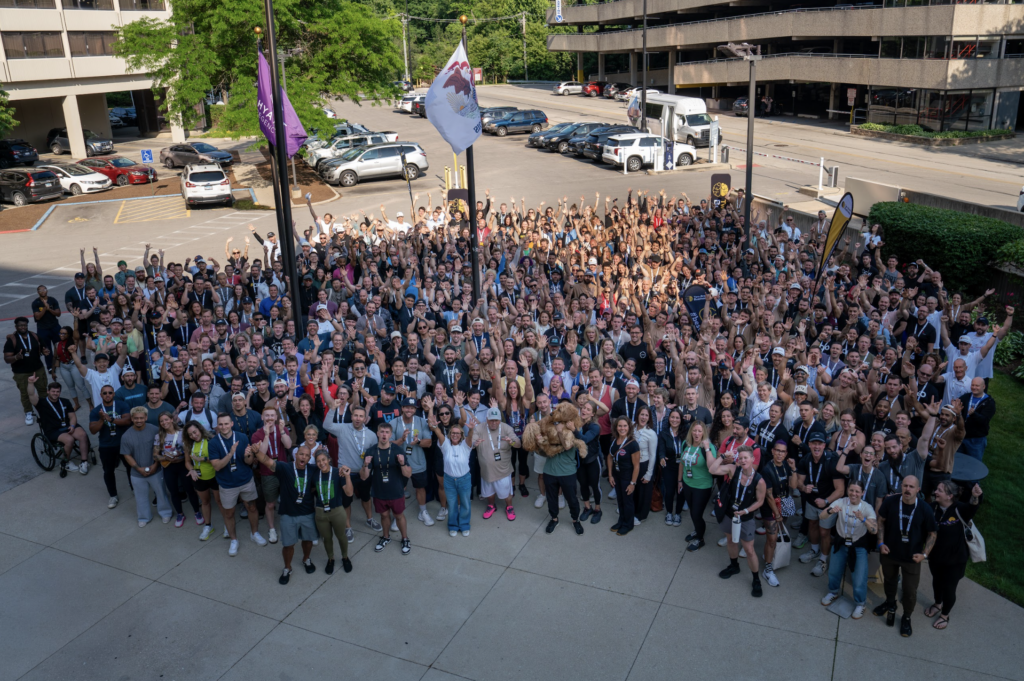
At Two-Brain, we have a results page with testimonials from over 1,500 gym owners. When someone wonders whether Two-Brain works for their type of gym, we don’t ask them to take our word for it—we show them. We have a photo from the Two-Brain Summit with a thousand gym owners who took time off work to be there. That’s proof you can’t fake.
What’s the equivalent at your gym?
Before-and-after photos, client stories with context (their age, their goal, how long it took), testimonials from people who look like your ideal prospect: These close the gap between interest and action. If the only proof you have is a blurry photo from a Google review, you’re losing people to a competitor who has a wall of wins.
The Simple Version
Standing out online in 2026 doesn’t require a big marketing budget or a full rebrand. It requires clarity.
Get clear on who you serve. Simplify what you offer. Be consistent about both across your GBP, your website and your Instagram. Then back it all up with proof that you actually deliver.
When a prospect searches for a gym and lands on your online presence, they should feel like they’ve finally found the one that was built for exactly them.
Want to know exactly where your online presence is leaking leads? Two-Brain put together a free AI tool that audits your gym’s Instagram and identifies the gaps: GymIG.com.
And if you’re ready to build all the systems that take a gym from stuck to scaling, book a call today.