I’ve regularly stated that Two-Brain can get a gym owner to $100,000 annual income in an average of 25 months.
That’s based on data—and some gym owners move much faster.
Here’s another data point: Mentorship helped Ryan McStockard earn a spot on our Top 10 leaderboard for owner income after he went through pandemic-period months when he didn’t pay himself anything.
If you’re keeping score, that’s $0 monthly net owner benefit (NOB) to US$15,000+.
Quick refresh: NOB is everything the owner “gets” from the gym. It can include salary, dividends and expenses the business covers, such as phone or vehicle payments.
Here’s our Top 10 leaderboard that shows rolling three-month averages for one gym only:

Ryan bought his gym in 2014 and, like many owners, ran the business on effort and faith, not systems and data. When the 2020 pandemic hit, he was in survival mode, working 12-16 hours a day. Some months, he didn’t take home any personal income.
“Just keeping the gym alive was a win,” Ryan said.
Fast-forward a few years, and Ryan’s business looks very different:
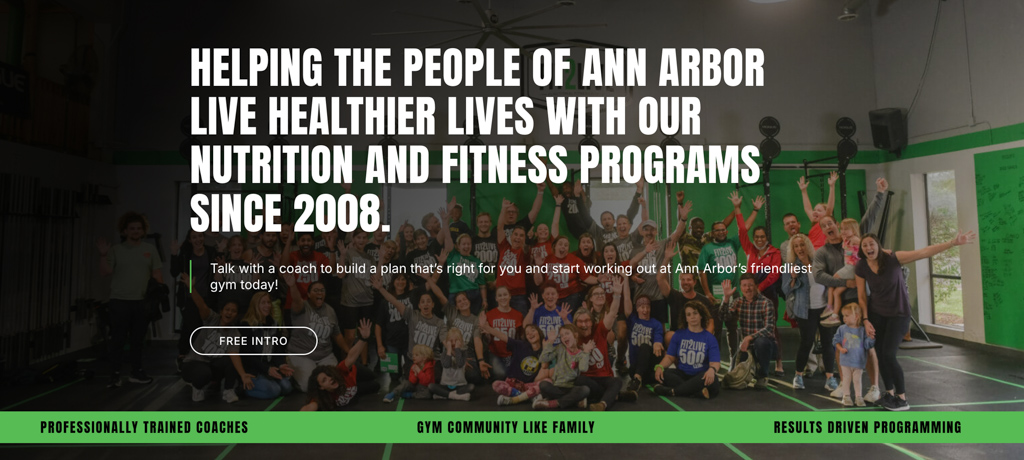
- Name: Fit2Live in Ann Arbor, Michigan
- Method: functional fitness
- Total Members: 184
- Big Group Members: About 155
- Average Revenue per Member (ARM): $270
- Revenue Mix:
- Big Group: 54%
- Personal Training: 32%
- On-Ramp: 6%
- Nutrition/Other: remainder
- Length of Engagement: 42 months
- Pricing Highlight: PT rate is $85 per session
- Facility Size: About 5,500 sq. ft.
- Coach Team: 10 trainers
- Ryan’s monthly NOB from his gym alone (he has another business): Above $15,000
These numbers aren’t the result of luck.
They’re the product of strategic shifts in branding, services, pricing, retention, onboarding and owner mindset.
The Turning Point: From Effort to Engine
Early on, Ryan wasn’t concerned with metrics and data.
He recalled his initial mindset: “I don’t need the numbers. I can wing it. I’m good enough. … But then you start banging your head against the wall.”
Here’s what that looked like in the gym:
- Big Group classes generated over 90% of revenue.
- Members were on-ramped through three rushed sessions, and the goal was to get people into group classes.
- He had no clear retention strategy.
- He didn’t track profit or owner benefit—only revenue.
- He worked insanely long hours and still felt stuck.
In early 2021, after following Two-Brain since 2017, Ryan invested in mentorship even though cash was tight as the pandemic wore on.
“I can’t imagine where I would be if I didn’t make that decision,” he said. “But I got to the point where my back was up against the wall and I said, ‘We’re either gonna do this right or not at all.’”
That investment didn’t just change metrics; it changed his life.
Key Changes
Here’s how Ryan shifted the foundation of his business with the help of his mentor:
1. Installed an On-Ramp Optimized for Retention
Ryan ditched his three-session group-class feeder program for a polished onboarding experience that’s a key part of the client journey. The program became a revenue stream on its own.
The new plan improved retention—our data shows this always happens when on-ramps are installed or upgraded. As I’ve said for years, on-ramps are not a barrier to entry. They are a barrier to exit.
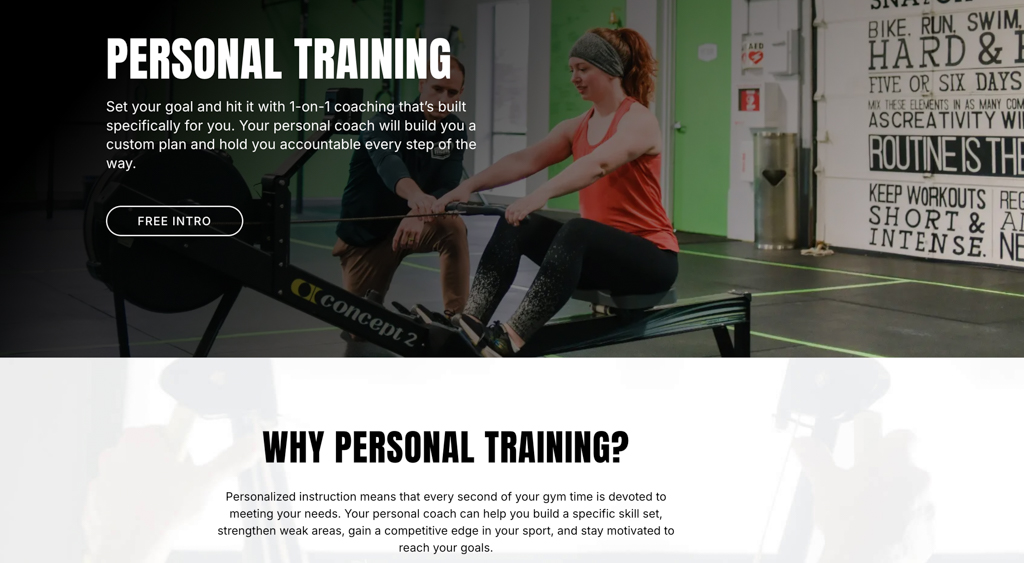
Instead of just funneling people into group classes, Ryan’s on-ramp started to feed a quickly growing PT program—a brand new, high-value revenue stream.
2. Diversified Revenue Mix Strategically
Ryan went from depending almost totally on group classes to a much more stable revenue mix:
- Group remained a pillar—but not the only one.
- Personal training at $85 an hour grew to 32% of revenue.
- On-ramps, nutrition coaching and ancillary services provide margin and spread risk.
That balance increased ARM to $270. Bonus: PT services have great retention because one-on-one relationships become very strong.
3. Focused on Retention
Instead of pouring money into getting new leads, Ryan worked to keep high-value members longer.
Among other things, he implemented:
- A complete client journey with all touchpoints mapped.
- Coach accountability for member engagement.
- Milestone celebrations (50 classes, 100 classes, 250 classes, etc.). One member just hit 3,000 classes—not a typo.
The result of calculated investments in retention?
Fit2Live’s length of engagement (LEG) is 42 months—almost four years.
That’s an elite number. Our data shows average LEG for a coaching gym is 15-24 months, and many gyms are well below those numbers.
4. Optimized Space to Increase Revenue Per Square Foot
Ryan reorganized to do more without paying more in rent. For example, he carved out a 700-sq.-ft. room dedicated to high-ticket PT sessions.
Small spaces, when used intentionally, can become big revenue engines.
5. Built a Team
Ryan created systems and learned to lead a team that can deliver value consistently, even when he isn’t around:
- 10 coaches have varied roles.
- One is full time, two part-timers work 25-35 hours a week, and the others work 5-15 hours a week.
- Responsibility is delegated.
- Coaching standards are clear.
Ryan’s personal gym work schedule is capped at about 80 hours a month, or about 20-25 hours a week. That allows him to work on another business and spend lots of time with his family.
6. Carefully Planned Owner Compensation
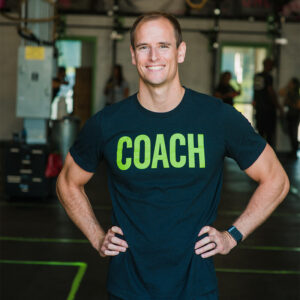
Ryan has optimized his compensation to minimize taxation and derive all legal benefits from owning a business—and he got help doing that through our Tinker Mastermind for upper-level gym owners.
Ryan:
- Pays himself a modest salary through the S corp.
- Takes quarterly distributions.
- Runs other allowable expenses through the corp—vehicle, meals, etc.
- Uses the company to invest in professional education; he saves on taxes but acquires valuable skills he can use for life in any endeavor.
This isn’t just tax strategy; it’s maximizing net owner benefit and increasing his reward for running a business.
The Real Difference: Mindset
Ryan’s mindset allowed him to prioritize:
- Data over instinct.
- Systems over chaos.
- Calculated over over vibes.
- Sustainability over short bursts of energy.
That pivot turned a barely surviving business into a predictable, profitable enterprise in fewer than five years.
Here are the key lessons for you:
1. Stop Guessing and Start Measuring
If you aren’t tracking key metrics such as NOB, ARM and LEG, you’re flying blind.
2. Build Services That Increase Value
Group classes are great—for some people. But others want more attention. Sell it with one-on-one, small-group or semi-private coaching.
3. Focus on Retention
What would happen to your gym if you kept clients for 42 months? What about 25 as a first target? Create a client journey that’s optimized for retention and track LEG closely.
4. Create Systems
You can’t scale if you can’t delegate. And you can’t delegate without systems.
5. Structure Compensation Consciously
Your business should pay you first, not last. Prioritize your income and consult an accountant or tax pro who can help you derive every benefit from your business.
6. Get a Mentor
You do not have to figure all this out alone. A mentor—like Ryan—can analyze your metrics, create a plan, supply resources and provide accountability.
If you stick to the plan, your metrics—including NOB—will improve fast.
To talk about transforming your business into a profit engine, book a call here.