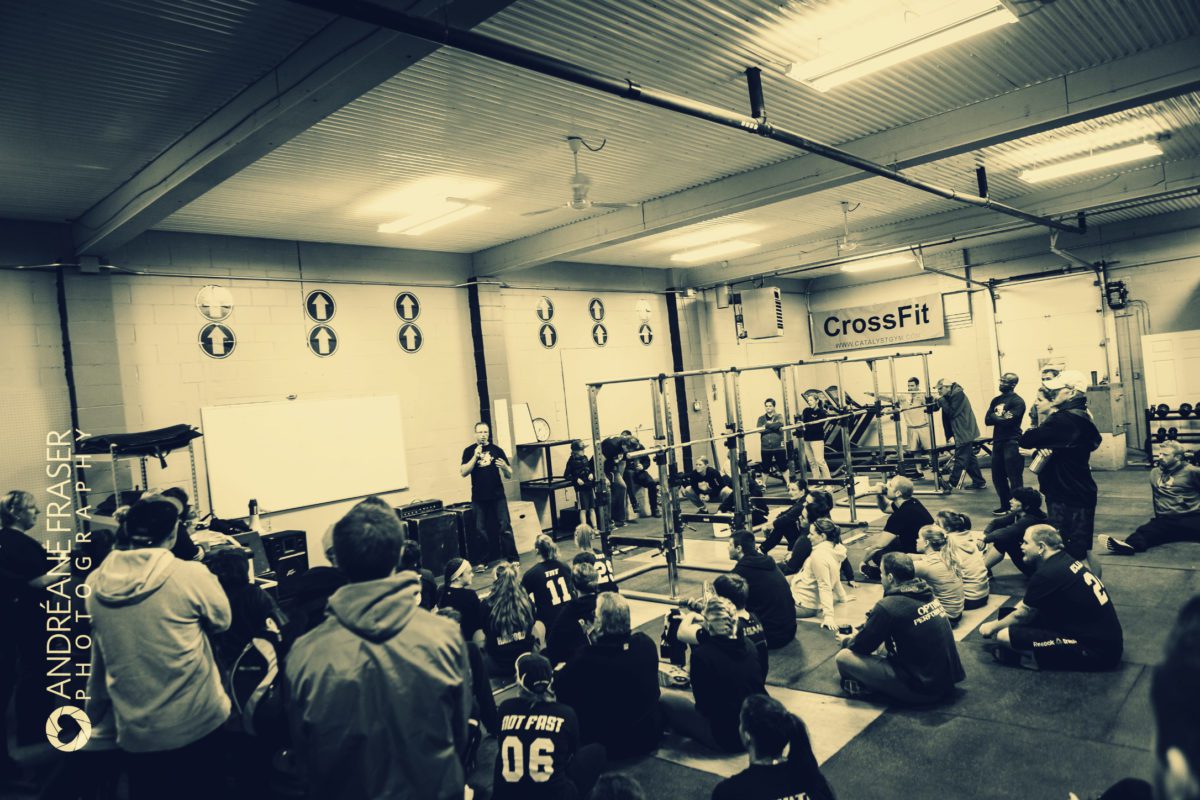
My gym, Catalyst, turned 20 years old late in 2025.
Over those two decades, I’ve learned a lot from some great times and some brutally hard times.
What follows aren’t tactics—my usual “do this to get this result” approach. Instead, I’ll list the mindset shifts and perspectives I had to earn the hard way.
If you want a gym that lasts 20 or 30 years, too, you’re going to need these.
2003: Every Company Is a Media Company
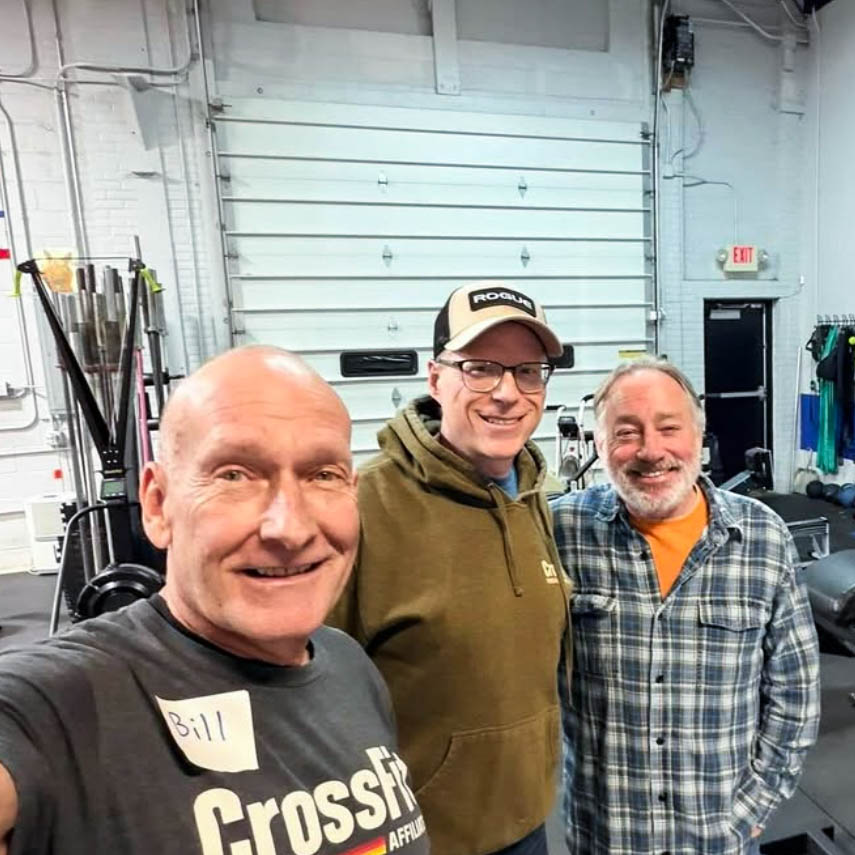
Back in 2003, I was publishing content online while working as a trainer—on T-Nation, local news sites, personal training blogs. My clients were drawn to the authority and expertise, not the building I was in.
I got so much business this way that a few of my entrepreneurial clients suggested I consider opening my own space to deal with the overflow. I humored them and looked at a few buildings I couldn’t afford—but the gym owner found out and fired me.
I opened a tiny studio two weeks later, and 40 people followed me immediately because I had established my expertise.
Years later, when I worked for CrossFit on the media team, founder Greg Glassman formalized the concept and told me, “Chris, every company is a media company now.”
The basic rule to make it simple: Give away knowledge for free and sell coaching. With AI, knowledge is easy to acquire, but it will not save most people. Coaching will. And so publishing knowledge for free and selling your coaching is still an amazing business plan.
I actually learned this from Seth Godin, and from Chris Anderson in his book “The Long Tail.”
Publish content so the right people will find you. And remember that great content is evergreen. So even if you wrote something 10 years ago, somebody can view it today and still find their way to you.
2004: Paint One Wall
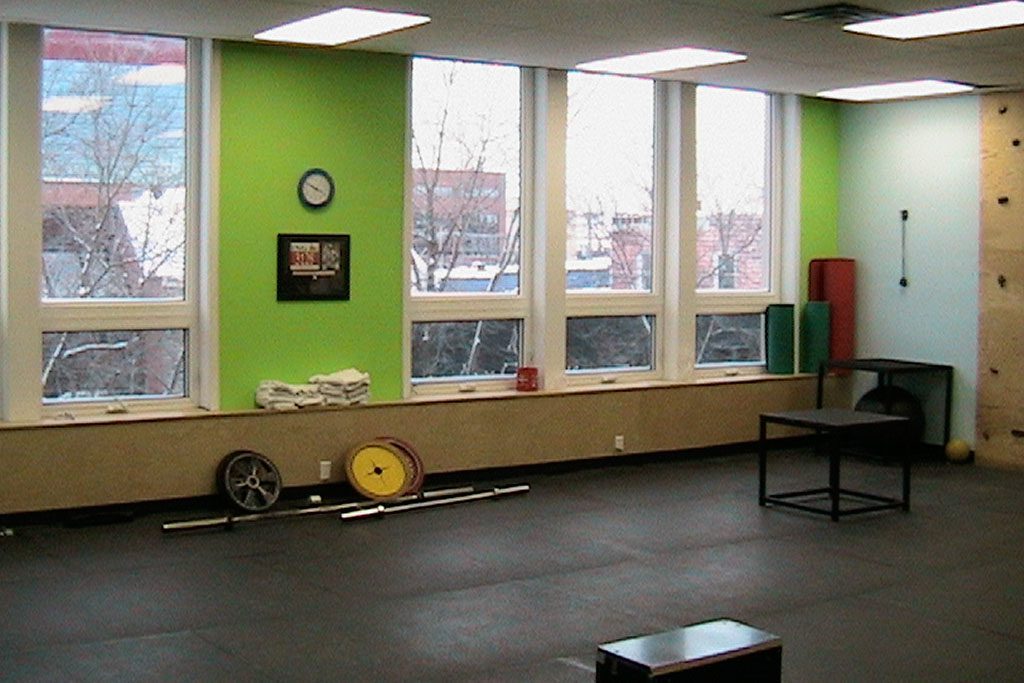
Don’t wait. Just start. I call it “paint one wall.”
Perfectionists wait for the perfect weekend, the perfect plan, the perfect setup. And because that perfect moment never comes, nothing ever gets done.
I’m not a perfectionist. I say, “I’ve got 10 minutes. I’ll paint one wall.” If I spill a little paint, I’ll fix it later. If I miss a spot, I’ll come back. The important thing is that I start.
I learned this from Seth Godin, who wrote extensively about writer’s block, and from Steven Pressfield in “The War of Art.” Seth says professionals show up and do the work. They don’t wait to feel inspired. They work because it’s Monday at 6 a.m. and it’s time to work.
That mindset is what led me to sign a lease on my first gym: a 400-square-foot apartment with red carpet, gray wallpaper, no mirrors and one barbell. None of it was perfect—but it existed.
The lesson stuck: Don’t wait until things are perfect to make a change. Minimize risk, yes. But once the risk is reasonable, it’s your duty to act.
2005: Being a Good Coach Is Not the Same as Being a Good Owner
I learned this lesson the hard way. I had certifications stacked like alphabet soup—NSCA CSCS, ACE, ISSA. I thought I’d put every trainer in town out of business just by opening my doors. But people with better personalities, better energy and better people skills were crushing me financially.
It wasn’t until I read “The E-Myth” by Michael Gerber that it clicked. You wear different hats in a business. Trainer is one hat. CEO is another. The skills don’t translate.
Being knowledgeable doesn’t make you good at marketing. Being a great coach doesn’t make you good at managing people. In fact, coaching often sets you up to fail as a manager because clients pay you to tell them what to do, while staff don’t.
Nobody tells you this when you open a gym: You’re going to have to manage people. And being good at training people physically does not make you good at leading them professionally.
2006: Protect Your Cash Flow
In 2006, I nearly went broke because I didn’t understand cash flow.
Clients trained first and paid later—sometimes weeks later, sometimes never. Meanwhile, I paid my staff on time every time. By mid-2006, clients owed me $12,000, my bank account was empty, and I was maxing out credit cards just to make payroll.
That’s when I learned that receivables are pretend money. Cash flow is the lifeblood of your business.
The fix was simple but uncomfortable: Collect in advance and pay on delivery. We sold packages up front. Late cancels cost sessions. Suddenly, clients always showed up, staff got paid, and the business stabilized.
That change also attracted better trainers. I paid out 44% of revenue, and some thought that sounded low—until they realized I had solved their biggest problems: collections, marketing, consistency.
Protecting cash flow didn’t just save my business. It created stability for my family and my staff.
2007: Just Ask
In 2007, I stopped trying to invent everything myself and learned to just ask.
Instead of asking “how do I fix this?” I started asking “who has already fixed this?”
That’s how I stopped guessing on pricing, T-shirts, supplements, booking systems and referrals. Instead of designing obscure shirts nobody wanted, I asked what was selling. Guess what? I sold more T-shirts.
Most people don’t ask because of ego. They want to build everything from scratch. That’s the fastest path to a broken business.
I also learned something important about myself: I’m terrible at guessing what people want. So now I ask clients what they want, staff what they want and mentors how they solved the problem before me.
2008: The Power of Having No Choice
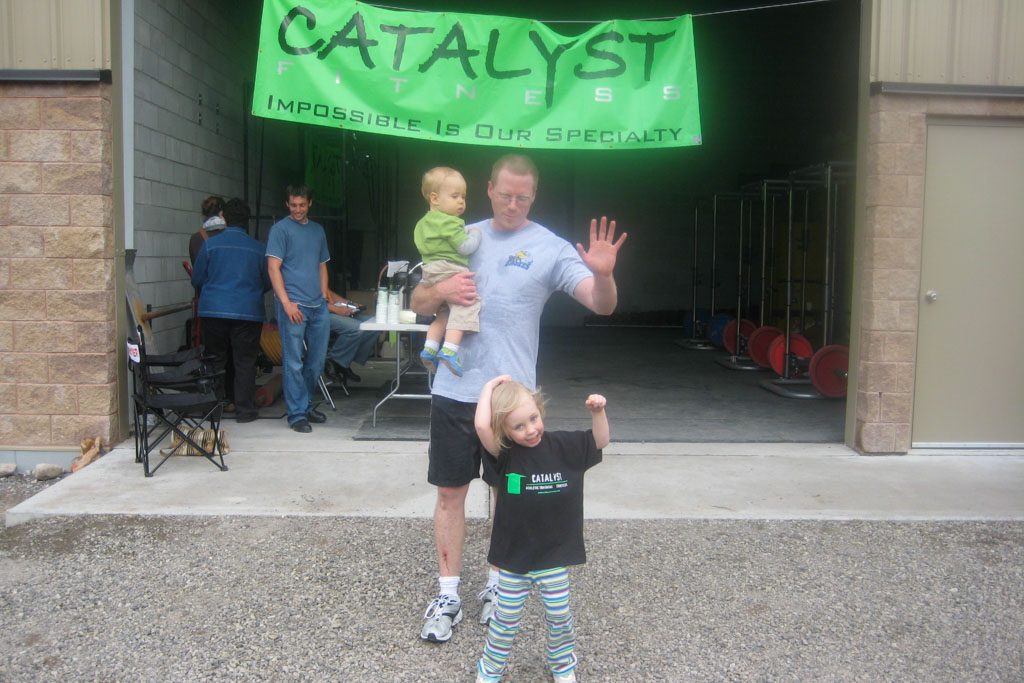
2008 nearly ended Catalyst.
Two locations. Two leases. Two full-time jobs. CrossFit wasn’t easy to sell yet. The economy was collapsing. I had no real resume outside fitness.
I didn’t keep going because I was brave or smart. I kept going because I had no choice.
I had a quote taped to my dashboard from a heavy metal song: “This is all I know, this is all I have, and I will die in this gym if I have to.” It wasn’t inspirational—it was desperation.
Rock bottom strips away ego. When you can’t pay rent or buy groceries, you stop pretending you’ll “just figure it out alone.” That desperation is what made me open to help.
2009: Books Tell You What to Do. Coaching Gets It Done.
By 2009, I had listened to over 50 audiobooks—marketing books, business books. None of them changed my business.
Meeting my mentor, Denis, did.
He listened, then said, “Do this by Monday.” And because I paid him $500—money I didn’t have—I did it.
That’s when it clicked: Knowledge isn’t power. Coaching is.
This is the same reason clients pay Two-Brain. Knowledge is free. Coaching creates accountability. That lesson reshaped my business and eventually became the foundation of my mentorship practice.
2010: Get It out of Your Head
In 2010, Denis forced me to write down every role, rule and task in my gym.
Until then, everything lived in my head. I thought things were “common sense.” They weren’t. That’s why I coached the day my son was born. I thought nobody else could do it. The truth was I hadn’t documented anything so I was chained to the gym.
Writing processes down changed everything. It led me to start dontbuyads.com—a blog that was really a love letter to future Chris.
Write it down or repeat the mistake. Reflection turns experience into expertise.
2011: Fix the Owner First
In 2011, Daniel Pink’s book “Drive” hit me with a brutal line: “Most people don’t have a single happy thought all day.”
That was me. I was burned out, sarcastic, cranky. The gym was profitable, but growth stalled because I was the ceiling.
Fixing the owner fixed the business. Watching my thoughts, reducing negativity and changing how I showed up made the gym grow again.
In bad times, your business sinks to the level of your systems. In good times, it rises to the level of your leadership.
2012: The Practice Mindset
In 2012, I started studying neuroplasticity after reading “Spark” by Dr. John Ratey and learning about the practice mindset from Seth Godin.
The practice mindset says, “This isn’t game day; this is practice.”
Every decision is a rep. Every program is a test. Reflection is what makes it valuable.
When you treat your business like practice, you stop fearing mistakes and start improving faster.
You can change your brain. You can rewire yourself. The practice mindset makes that possible.
2013: Your Audience Is the Asset
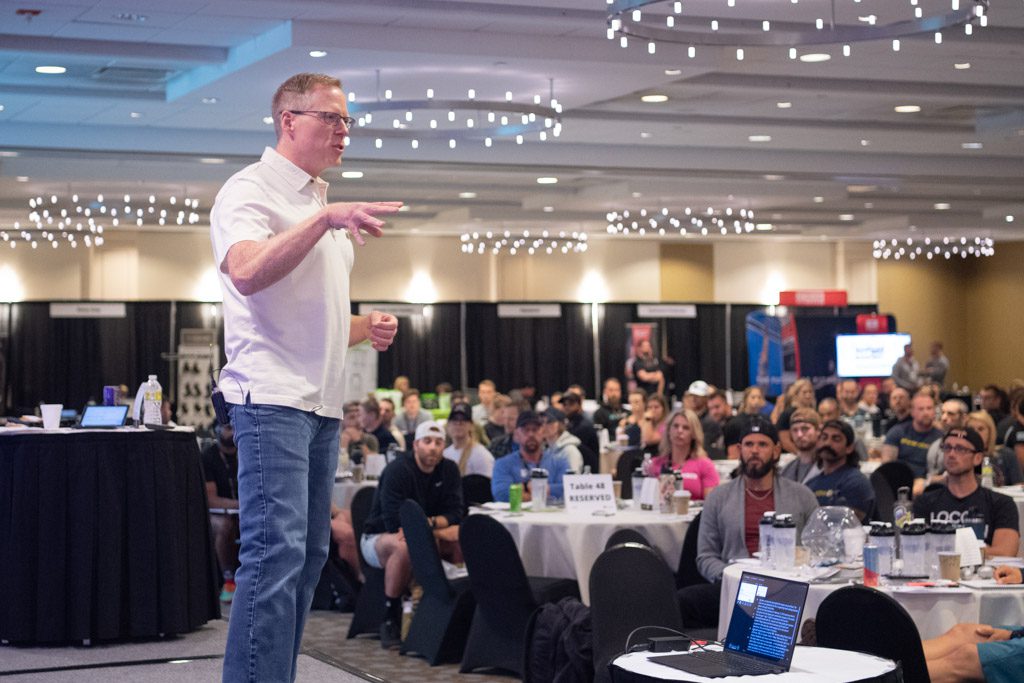
In 2013, I learned that your audience—not your product—is your most valuable asset.
Seth Godin says you don’t find an audience for your service; you find a service for your audience.
I learned this painfully when CrossFit Brain was shut down without warning. Greg had originally intended to feature a chess puzzle on CrossFit.com every day, and we were cranking out “brain WODs” on a website. We even created a seminar.
En route to our first seminar, I got a call from Kathy Glassman, Greg’s sister, and I was told the product wasn’t tested, and the audience deserved better. This experience stung, but I realized that an audience is sacrosanct. Nothing must be allowed to damage it.
Products change. Brands change. Locations change.
Protect your audience.
2014: Resilience Wins
In 2014, Dave Tate from EliteFTS gave me a lesson I’ll never forget: To win in business, just survive three more years.
Business is a game of attrition. Most competitors disappear if you wait long enough.
I watched fads come and go, shady operators vanish, attackers retreat into anonymity, and small gyms close.
Resilience—not brilliance, volume or vibration plates—won.
2015: Level up the Conversation
In 2015, I learned to level up the conversation.
Angry emails get phone calls. Phone calls get meetings. Social-media drama gets direct contact.
I learned this from Chris Voss in “Never Split the Difference”—and we had him lecture on the topic at the Two-Brain Summit years later.
Escalating the medium de-escalates the conflict. Arguments collapse in open air. Left in your head, they grow.
Level up the conversation and you regain control.
2016: Stop Guessing
I should have learned to stop guessing a decade earlier, but I fell back into ego. I assumed I knew why people came to my gym. I thought they came for what I liked: brutally hard workouts, spicy programming, the “war on the floor” vibe. I thought they came because the gym felt like a sport.
Then I read “The Pumpkin Plan” by Mike Michalowicz, and I decided to try something radical: I asked my clients what they wanted.
I booked slots with five of my best clients. One at a time. Notebook out. I asked two simple questions:
- What brought you here?
- What do you like best about this gym?
Five out of five said referrals brought them to Catalyst—which immediately made my Yellow Pages ads and early Facebook experiments look ridiculous.
But the second answer was the gut punch. Not one of them mentioned hard workouts. They said things like:
- “This is the only time all day someone tells me I’m doing it right.”
- “This is the only place I feel like I’ve accomplished something.”
- “All my friends are here.”
None of my assumptions were right.
That lesson extended everywhere: marketing, sales, programming, staff management, parenting, marriage. Guessing makes everyone unhappy. Asking leaves everyone better off.
If you want to grow your business, ask your best clients what they want—and give it to them if you can. Don’t survey the masses. Ask the signal, not the noise.
2017: You Can Do Anything but Not Everything
In 2017, everything in my life was going well—and that was the problem.
I had Catalyst and a few other ventures—Ignite and Spark. Two-Brain was about a year old. I was also working for CrossFit. I loved all of it. I was mediocre at all of it.
When I realized other people were carrying my weight, I made the first hard cut: I sold my shares in Spark. It was profitable. It was easy. And my partner was doing all the work.
That led to more cuts. Eventually Ignite. Eventually CrossFit.
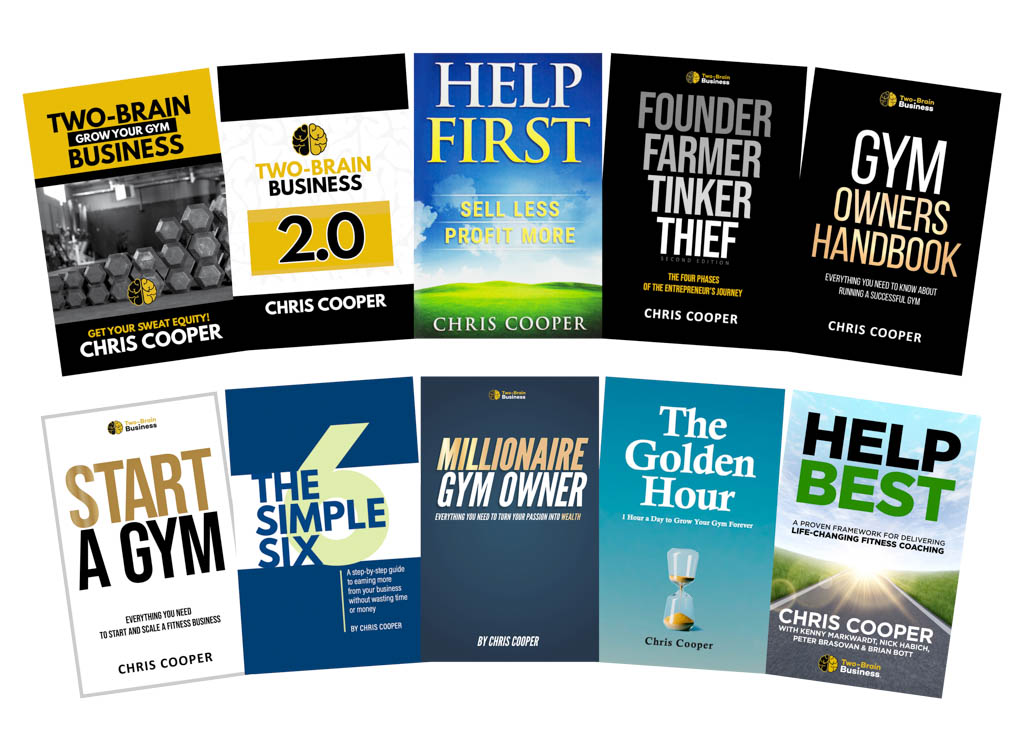
Two ideas cemented this lesson. One was Derek Sivers’ book “Anything You Want.” The other came from Dan Martell, who told me, “Most people start a second thing because they don’t have faith in their ability to grow the first thing.”
That hit hard.
Focus compounds. Context switching drains. One plus one doesn’t equal two—it equals three, or five or 10. Keep the main thing the main thing.
2018: Being Fired From the Wrong Job Is a Win
In 2018, I got fired from CrossFit.
It stung. But it was deserved. I was still splitting focus. And the minute I was forced to go all in on Two-Brain, it exploded. We doubled that year.
Ralph Waldo Emerson wrote, “Hardly know when demigods go, the gods arrive.” When the wrong person leaves the table, the right seat opens.
Being fired is a clearing event. Forest fires are tragic—but they allow stronger growth. This applies to jobs, staff, clients and even businesses themselves.
Sometimes losing something is the only way to make space for what you actually need.
2019: Stop Hiding
In 2019, working with Marcy Swenson—who was high up in coaching at Google—I learned a lesson that still echoes: Sometimes you’re not being tactful; you’re hiding.
I was procrastinating on a staff decision. Gathering information. Asking “what if?” Rewriting SOPs. Delaying.
Marcy stopped me cold: “Chris, stop it.”
Most of us don’t fail because we don’t know what to do. We fail because we won’t do it. Decision-making has two parts: knowing and acting. The practice mindset mentioned above allows you to fire the first shot, then adjust.
Ask yourself: do you need more information—or are you hiding?
2020: Calm Under Fire
In 2020, working with Todd Herman, author of “The Alter Ego Effect,” I learned the CALM model:
- Clarity—You start with the truth.
- Assurance—You tell people it will be OK.
- Leadership—You paint the future.
- Movement—You take the first step together.
When COVID hit, this model became survival. Every day. For almost two years. It guided communication with clients, staff and gym owners worldwide.
People don’t just need information in a crisis. They need leadership and motion. Stories create hope. And leaders must tell them.
2021: Good Operating Conditions
In 2021, Jocko Willink taught me about “good operating conditions.”
Bad weather. Low morale. Scarcity. Good—because the enemy has the same problems.
Gym closures were a black swan. The gyms that survived didn’t outsmart anyone. They endured. They trimmed to essentials. They held on.
When the doors reopened, fewer gyms remained—and demand surged. Survival was the strategy.
You can train for this. We call it a “pre-mortem” at Two-Brain: What could kill us right now? Prepare before the crisis arrives.
2022: Wartime vs. Peacetime
In 2022, I learned that wartime leaders aren’t always peacetime leaders.
The people who kept us alive during lockdown weren’t the ones to lead growth afterward. We were jumpy. Burned out. Still fighting.
Conditions change. Leaders must change with them. The people who get you here may not get you there—and that’s not failure. It’s reality.
2023: Nobody Else Can Make You Happy
In 2023, I learned that nobody else can make you happy—and you can’t make anyone else happy either.
Burnout was real. So I stepped away. I rode my bike. Worked out alone. Found flow again. And I brought that energy back into the gym.
That’s when I recommitted to the Golden Hour: one hour every morning to grow the business before doing anything else. That practice made me happy—and better.
Fix the owner. Fix the business. Again.
2024: Make It 8-Year-Old Simple
In 2024, I unlearned a myth I’d picked up from Greg Glassman: “Talk to the smart kids and they’ll explain it to everyone else.”
Smart people don’t simplify. They extrapolate. Messages get more complex as they travel.
The solution is 8-year-old simple. Core principles. Clear language. Start with “this is a football.”
If you start complicated, your message will arrive unusable.
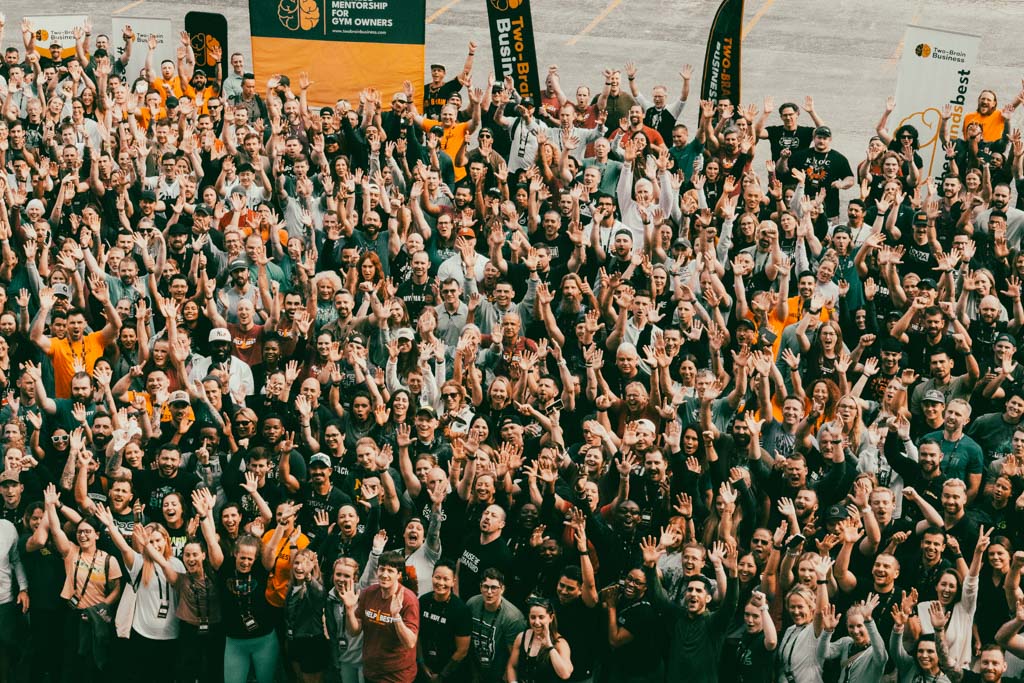
2025: We Sell Hope
In 2025, the lesson crystallized: We don’t sell workouts in gyms—we sell hope.
For the first time in history, lifespan is shrinking. Healthspan is shrinking faster. People are anxious, skeptical, disconnected. Governments won’t fix this. AI won’t fix this. Influencers won’t fix this.
Coaching will fix this.
We paint a clearer picture of a better future, and we take the first step with people who need help. Every step builds hope.
This is our responsibility: to earn well and build stable gyms—places where someone hears, “You’re doing it right. See you tomorrow.”
We sell hope—and that’s never been more important.
High-Speed Learning Without Pain
After struggling for many years, I now run profitable businesses—but only because I learned tough lessons.
I shared these lessons because I don’t want you to have to go through the same pain. You can skip to the good part and avoid the bruises, the cuts, the abrasions, the scars and the burns.
The mistakes have been documented so they can be avoided.
The lessons have been refined so you can learn them in weeks, not decades.
If you want help improving yourself and building a better business, just reach out. Book a call with a member of my team, and we’ll get you paired up with a mentor—just like I was.