Being a great coach is not enough to build a successful gym.
When I opened my first gym back in 2005, I thought I would win because of my certifications, knowledge and passion.
That didn’t happen.
I knew everything about creatine and VO2 max but nothing about rent, payroll or marketing. I was a good coach but a bad entrepreneur because my coaching skills didn’t translate to business.
It took years to realize that the skills I practiced daily in the gym would help me build a great business. I had many essential skills but wasn’t transferring them from the squat rack to the CEO’s office.
Here’s the good news: As a fellow gym owner, you, too, already have the tools you need to build a world-class gym. You acquired them as you learned how to train your body. But I bet you haven’t been using these skills in your business.
Let’s change that today.
1. Routine and Habit Formation
In fitness, consistency matters more than intensity. You know this. General physical activity or training sessions every day of the year will produce better results than 50 ultra-hard, high-intensity sessions at irregular intervals.
In business, it’s the same.
You can’t just work on your business when you feel inspired. And you can’t go hard for a week and then coast for a month. You need to make business improvement a habit. That’s why we teach gym owners to block off one focused hour per day—the Golden Hour. In that hour, they do one thing to grow their business before anything else.
Just like training, success comes from showing up and getting moving every day, even when you don’t feel like it.
Action: Build your CEO habit. Spend one hour a day on business growth. I’ve even put together a resource package to help you do it.
2. Resilience
Every athlete knows what it means to push through a tough workout or come back after injury.
That’s resilience.
In business, resilience means surviving cancellations, financial setbacks, staff turnover and other challenges.
Powerlifter Dave Tate of EliteFTS once told me this: “The secret to business is surviving three more years.”
You don’t have to crush the competition—most will quit on their own. You just have to keep going when it’s hard. Every difficult moment becomes a separator between you and the rest.
Action: When things get tough, remind yourself—this is just another rep.

3. Virtuosity
CrossFit founder Greg Glassman defined virtuosity as “doing the common uncommonly well.”
In the gym, it means perfecting the squat. In business, it means mastering the unsexy stuff:
- Cleaning bathrooms.
- Communicating consistently.
- Tracking your metrics.
- Writing standard operating procedures.
These are the “squats and deadlifts” of business. They’re boring, but they’re the foundation. Without them, nothing else holds up. So master the fundamentals and your business will thrive.
Action: Pick one “boring” system and improve it this week.
4. Progressive Overload
In fitness, you don’t add 200 lb. to your deadlift overnight—you add 5 lb. a week.
In business, it’s the same: Scale slowly. Add staff, services or space only when the system is ready. Jumping too fast—signing a big lease, hiring a full team before you can pay them—is the business version of trying to pull 500 lb. on Day 1.
Action: Add “one plate” at a time. Grow slowly but steadily. Make small jumps only when your current system runs smoothly.
5. Recovery and Deloading
You can’t train at 100% intensity forever. Recovery builds strength.
In business, recovery means taking real time off, delegating tasks and protecting your time. Most owners don’t take breaks because they don’t trust staff—or can’t afford to. That’s a systems problem, not a time problem.
You can’t pour from an empty cup. Burned-out owners don’t inspire clients or staff.
Action: Book a real day off next week. Then work with a mentor to build systems that let you take more.

6. Tracking and Measurement
In the gym, we track every result and output—but when it comes to business, most gym owners guess. But how can you make decisions on expenses if you don’t have exact revenue and profit figures?
You wouldn’t program for a client like this: “You said your favorite color is red, so let’s throw the red plates on and do as many squats as your buddy did last week.”
Don’t run your business blind. Track the six key metrics:
- ARM—Average revenue per member
- LEG—Length of engagement
- ROI—Return on investment
- EHR—Effective hourly rate
- NOB—Net owner benefit
- Clients—Headcount
What gets measured gets improved. You know this—it’s time to practice it.
Action: Start tracking these six numbers weekly. Treat them like your PR board.
7. Coaching and Feedback
Clients don’t get fitter by guessing—they get fitter through coaching.
Business works the same way. Just owning a gym for 10 years doesn’t make you a good owner. Getting feedback and taking action does.
A mentor helps you see what you can’t see, keeps you from repeating mistakes and accelerates your progress.
Action: Find a mentor. You can’t fix your blind spots alone.
8. Community and Accountability
Training partners make you better. You push harder and show up more often if you aren’t on your own.
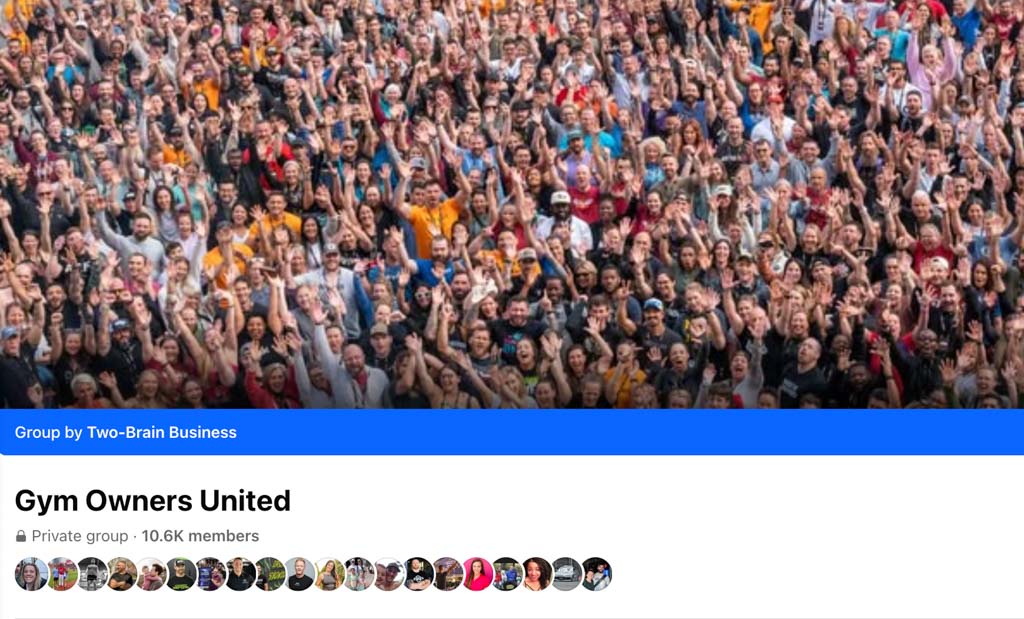
In business, peer groups do the same. A community of gym owners—some ahead of you, some behind—keeps you accountable and inspired. Teaching those behind you also makes what you’ve learned permanent.
That’s why the Two-Brain community exists: to give you people to chase and people to lead.
Action: Surround yourself with peers who challenge you to level up. You can do that here: Gym Owners United.
9. Adaptability
In fitness, we scale and modify workouts all the time. In business, adaptability means pivoting when markets shift or crises hit.
What worked 10 years ago won’t work today. Your clients evolve; your services must, too. The best owners don’t panic—they adapt.
Action: Look at your current offer. Is it built for today’s market or yesterday’s?
10. Long-Term Vision
Every good coach programs macrocycles—long-term plans that balance stress, recovery and growth.
In business, that means knowing where you are in the Founder → Farmer → Tinker → Chief path. Early on, your goals are simple: survive, pay the rent. Later, you focus on freedom, impact and legacy.
Your vision will evolve—but only if you plan for it.
Action: Define your next phase. What’s your goal for the next 12 months?

11. Creating Hope in Others
In fitness, we give clients hope. We show them they can change—and we take the first step with them. That’s leadership.
In business, your job is to create hope for your team and your clients. Show them what’s possible, then walk beside them until they believe they can achieve it.
Creating hope is the most powerful skill a leader can have.
Action: This week, tell one team member what’s possible for them and help them take the first step.
Progress: In the Gym and in the Business
I’ve been working out for a long time—almost 40 years. I’ve been coaching for 29 years, and I’ve owned a gym for 20 years.
I’m still practicing all these things. The skills that I learned in fitness are not sufficient on their own to build a great business, but they are necessary, and I lean on them all the time.
I still love working out because of the progress that I’m making, and I still love owning a business because of the progress that I’m making there. I hope you feel the same.
And if you don’t, book a call with my team. We’ll find out what you want to accomplish and show you the steps you need to take to get there.