If you’ve ever lit a pile of money on fire inside Facebook Ads Manager, you’re not alone. Most gym owners have. The rules change, the costs creep up and results that used to come easy now require a lot more thought.
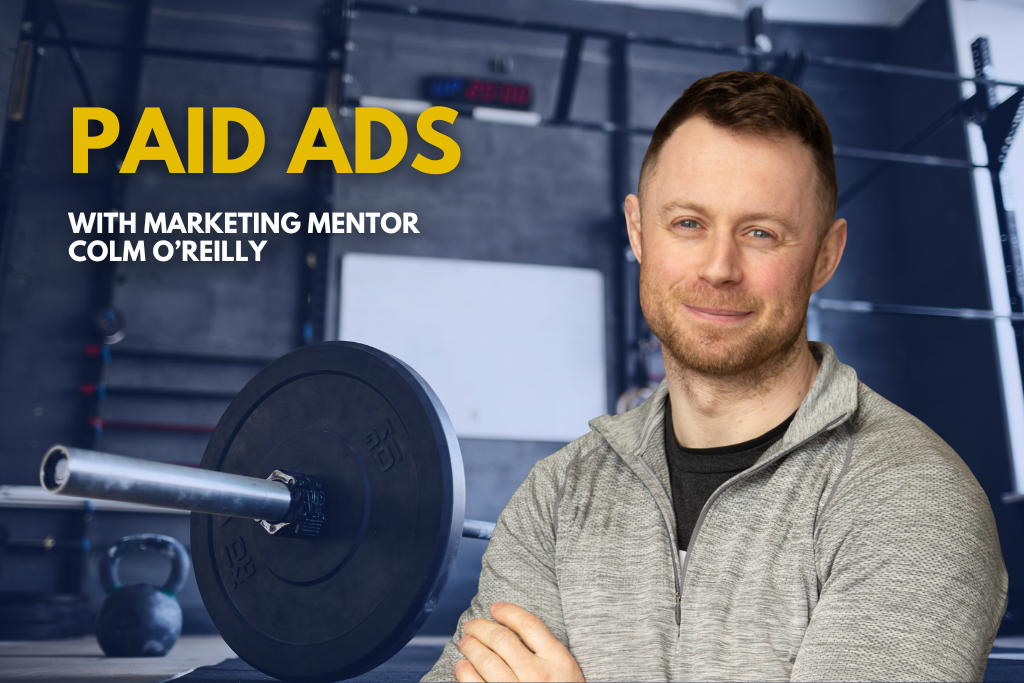
Colm O’Reilly, Two-Brain’s paid ads specialist, spends six to eight hours a day on calls with gym owners, helping them set up Facebook and Instagram ads at the lowest possible cost for the maximum impact.
On a recent episode of “Run a Profitable Gym,” he sat down with Two-Brain CEO John Franklin to share exactly what’s working right now.
Here’s the short version: Ads still work. But they work best as the fourth marketing funnel—not the first.
Ads Amplify What’s Already There
At Two-Brain, we talk about four marketing funnels: referrals, organic social media, content and paid ads. Ads come last because they amplify the other three.
Colm had a client who ran a yoga studio. When they ran generic fitness ads, lead costs hovered around $30. When they switched to yoga-specific ads that matched their social media and website, lead costs dropped to $5 almost overnight.
If your Instagram page is empty or your ads say one thing and your posts say another, you’re wasting money. Prospects will click on an ad, then immediately check your socials to decide if the gym is for them. Consistency wins.
Start With Ad Math Before Creative
Before you build any ads, know your numbers. Colm’s framework is straightforward:
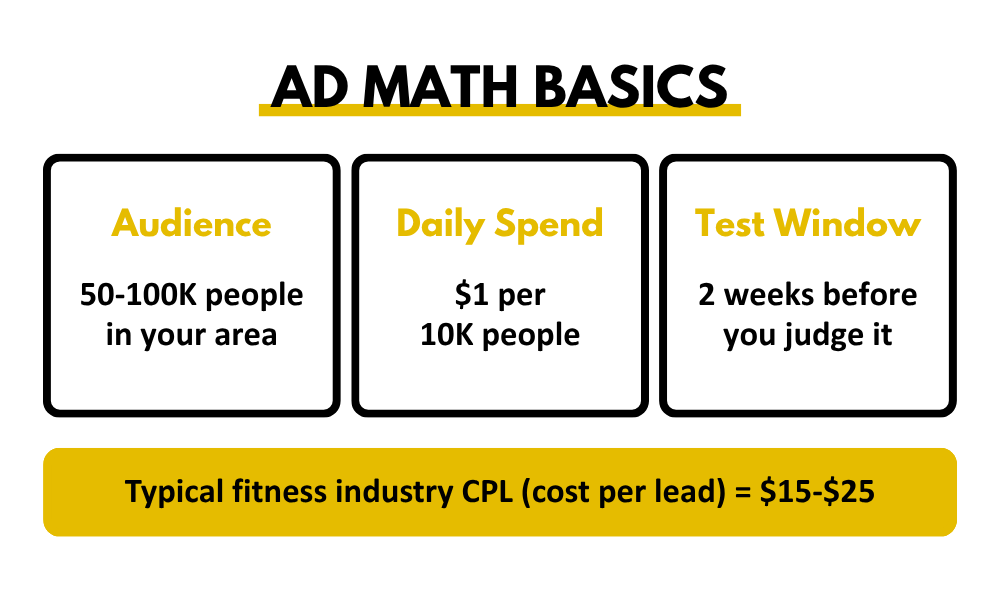
- Target an audience of 50,000-100,000 people. Drop a pin on your gym, set your age range (generally 30-60) and stay within about four to five miles. Tighten that radius in cities, loosen it in rural areas.
- Budget $1 per 10,000 people per day. That puts most gyms at $5-$10 per day, or $150-$300 a month to start. This holds whether you’re spending in dollars, euros or pounds.
- Wait 10-14 days before drawing conclusions. Don’t check the scale every morning expecting miracles.
Industry standard cost per fitness lead is $15-$25. Two-Brain’s goal is to get that under $15, ideally under $10. At a 50% conversion from lead to No Sweat Intro, gyms in standard markets should be acquiring new clients for around $100-$150.
Some markets are more expensive—lead costs of $35-$50 aren’t unusual in competitive metros. That means client acquisition can run $500 or more. But that’s not necessarily a problem. If a member stays 24 months at $250 a month, their lifetime value is $6,000. Paying $500 to acquire a $6,000 client is still a very good business—if your retention is solid.
The number one marker of success: Did you make more in front-end revenue each month than you spent on ads? That’s the question to keep asking.
What Changed After the Andromeda Update
In 2025, Facebook rolled out its Andromeda update, which changed how ads are delivered. The old approach—running the same ad in three color variations and letting Facebook pick the winner—no longer cuts it.
Now, Facebook reads individual user behavior and serves the ad most likely to resonate with that specific person. Two people interested in HYROX training might respond to completely different messages: one wants to compete, one wants to keep up with their friends. The platform figures that out, but only if you give it enough variety to work with.
That means you need to think in personas. Colm’s examples:
- “The low-energy dad.”
- “The busy mom.”
- “The gym-goer who’s not seeing results.”
Once you know the persona, you speak to their desire—lose the dad bod, have more energy, keep up with your kids, reduce back pain, feel younger.
A simple framework Colm uses is what he calls the “BUT” structure:
- Do you want to lose weight, but not sure where to start?
- Do you want to get stronger, but worried about injury?
- Do you want more energy, but intimidated by gyms?
Goal + objection = curiosity. That curiosity gets people to stop scrolling.
Three Types of Creative That Work
Colm recommends a mix of three creative types:
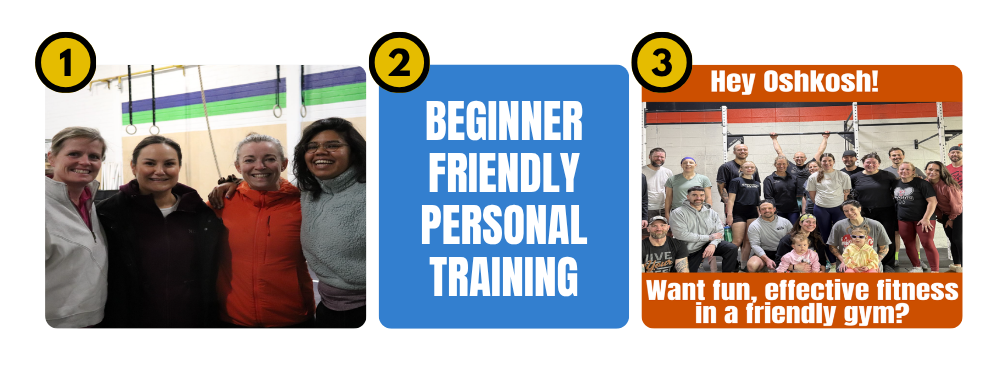
1. People smiling at the camera. Not working out. Not lifting heavy. Not doing complicated movements. Just real people, smiling, looking directly at the lens. No text overlay needed. These feel like organic posts—like something a friend would share—and they don’t trigger the “this is an ad” reflex.
2. A block of text with a direct question. “Looking to get in shape, but nervous about joining a gym?” Simple, clear, no-nonsense. This appeals to the person who doesn’t want to be entertained—they want to know if this is for them.
3. Photo plus text overlay. The middle ground—it looks like an ad, but it’s warm and speaks directly to a pain point. The image does the heavy lifting, and the text points people toward taking the next step.
What to Do When You Get a Lead
People forget what they clicked on almost immediately. Follow up with leads within five minutes. Use all three channels—text, phone call, email. Don’t stop at one attempt.
At Colm’s gym in Ireland, here’s the sequence: an automated text goes out saying a coach will call shortly, then someone calls from a personal number, then a WhatsApp message if there’s no answer. Emails follow at regular intervals. It’s automated to start, then human as quickly as possible.
One of Colm’s members, Linda, required eight calls before she finally came in. She was nervous. She wasn’t ready. But Colm didn’t give up, and Linda has been a loyal member for more than three years—and has since referred her husband. If Colm had stopped calling after two tries, that never would’ve happened.
When someone does pick up, Colm’s approach is simple. Ask if it’s a good time. Tell them you just want to ask a couple of quick questions to see if you’re a good fit. Then ask three things:
- Is our location convenient for you?
- What are your goals?
- Are you thinking more one-on-one or group training?
Reflect their answers back. If it’s a fit, invite them in. If they ask about price, don’t dodge it—use their answers to point them toward the right option and give them a number. Saying “we don’t give prices over the phone” kills trust before you’ve built any.
Not everyone will respond. Most won’t. That doesn’t mean the money is gone.
Colm blocks out one Saturday a month to call old leads—last month’s, the month before that, the month before that. He puts in headphones, makes 50 calls, gets five conversations, sends WhatsApp messages to the rest. Every single time he’s done this, he’s gotten a new client.
It’s not glamorous, but consider this: If one of those callbacks turns into a member worth $6,000 in lifetime value, and it took you two hours of calls to make that happen—that’s $3,000 an hour. The math makes it worth picking up the phone.
When Ads Aren’t Working
When gym owners say “my ads aren’t working,” Colm puts the problem into one of two buckets.
Bucket one: a Facebook problem. You’re not generating enough leads, or your lead costs are too high. The fix is usually in your targeting, your messaging or your budget. These are things you can tune.
Bucket two: a sales and follow-up problem. Leads are coming in, but they’re not converting. Work through your set, show and close rates. Are people booking? Are they showing up? Are they joining? Each of those points is a separate problem with a separate solution.
“Lead quality is bad” is often a red herring. What it usually means is that follow-up is inconsistent or the initial phone conversation isn’t building enough trust to get someone in the door. Leads are like newborn babies—they need attention and consistency.
Put In the Reps
Paid ads in 2026 reward gym owners who have their house in order: consistent content, real social proof, strong retention and a follow-up process that doesn’t quit after one call.
Start small. Know your numbers. Give Facebook variety to work with. Follow up faster and more persistently than feels comfortable. And revisit those old leads every month—because most people don’t solve their fitness problem without you.
If you want help setting up your paid ads the right way, Two-Brain clients work directly with Colm. He’ll help you build the creative, set the targeting and make sure the math actually works for your market. Book a call here.