Corey Lewis opened his gym Xtra Mile Fitness at 23, fresh out of college. In January, he’ll hit 15 years as an owner, and the average staff member at his gym has been with him for more than eight years.
Finding and keeping good coaches is one of the biggest challenges gym owners bring to Two-Brain, and Corey has built a system that handles both. He’s now a Two-Brain mentor, and his presentation on this topic was one of the highest rated at our Summit.
His approach comes down to three things: hire the right people, keep investing in them and celebrate them often.
Watch the video below or keep reading for the key points.
Filter for Values First
Corey posts jobs on Indeed and LinkedIn, shares them with the local fitness community and recruits from inside his gym. Every applicant applies through his website and submits a three-minute video explaining why they want to coach. The video shows him how the person talks, how they come across and what drives them.
He hires for values and personality. Seeing, correcting and cueing movement can all be taught. A heart for helping people needs to be there from the start. Corey will even hire someone who has never coached (usually from within, through an internship), and every new hire goes through his onboarding regardless of experience.
Candidates who pass the video stage go on a 60-minute walk with Corey so he can get to know them. A good test: Would you want to go on a road trip with this person?
If the walk goes well, the candidate works out with Corey’s senior coaches, who watch how they move, interact and treat members. Everyone has to be aligned before an offer goes out. When it does, Corey records a personal video explaining why he wants the candidate on his team. The job details follow by email.
Rethink Day 1
In his Summit talk, Corey shared industry data showing that 20 to 40% of new coaches leave in their first 90 days, with a big share of those leaving in the first 45.
The standard first week (SOPs, shadowing, meetings) is necessary, but it’s dull, and a dull start can plant seeds of doubt.
So Corey’s new hires start at a local diner, where he takes them to breakfast on Day 1. Then they head to the gym and work out with a class. For the rest of that week, the main assignment is to spend time at the gym, meet members and become part of the community. Corey sends SOPs over, but they don’t review them together until Day 4 or 5. Formal onboarding starts in Week 2.
Full-timers are paid their onboarding rate during that week. Experienced part-timers get a free membership plus pay for shadowing hours.
Staff Meetings
New staff members meet with Corey weekly. Some meetings have an agenda. Others are open time to talk about what they’re learning and where they’ve hit speed bumps. Over time, meetings shift to every two weeks, and part-timers usually move to quarterly check-ins around the one-year mark. Full-timers meet with Corey every week for as long as they’re on staff.
Corey used to assume his coaches would bring frustrations to him on their own. Once they had a guaranteed time with his full attention, the walls came down, and he sees that as a major reason his coaches stay so long.
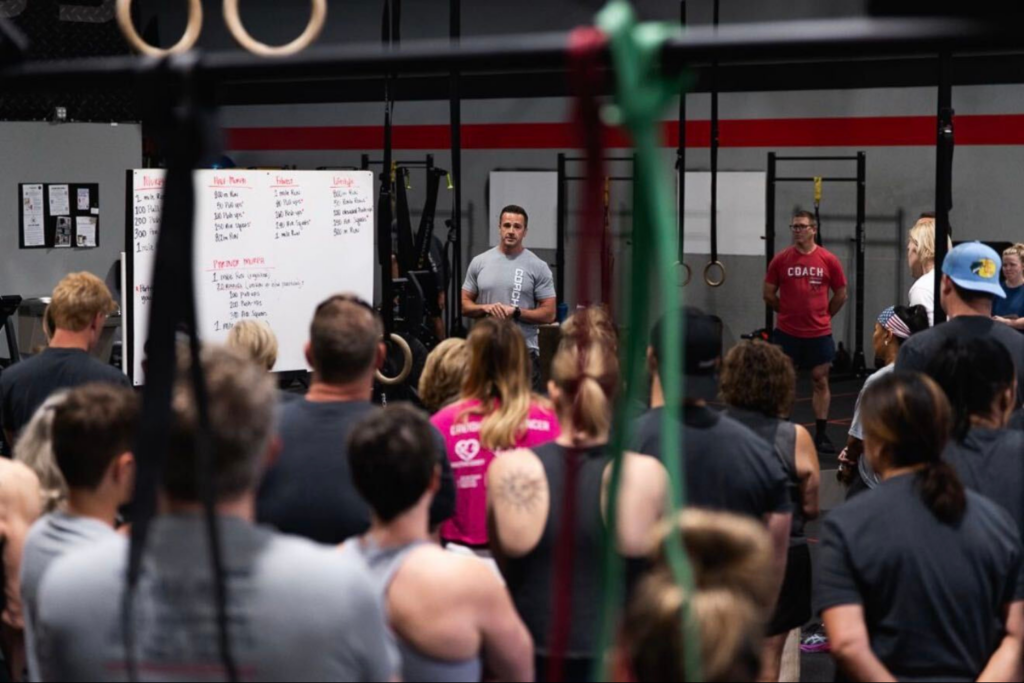
Once a quarter, Corey runs a two-hour staff meeting on a Sunday morning, when his part-timers can attend. He pays everyone to be there and brings coffee and snacks. With wages included, the meeting costs several hundred dollars, so he packs it full. The return is a team that leaves on the same page.
One of his mentees runs staff meetings over Zoom so everyone can join. Pick the format that works for your team.
Build a Career Roadmap
Corey took career roadmaps straight from the Two-Brain toolkit, and he calls them the anchor of his staff system.
Full-timers do a roadmap every quarter, and the core of the meeting is numbers. Corey asks what the coach wants to earn and builds a spreadsheet with them on the spot. The coach leaves knowing how many PT clients, group classes and specialty programs it will take to hit their target.
In Corey’s experience, coaches tend to lowball themselves with numbers that wouldn’t cover their bills. The roadmap shows them what’s possible and helps them see coaching as a long-term career.
His team includes himself, his wife, one other full-timer and nine part-timers. Many of the part-timers have full-time careers and coach because they love the community. Corey still asks about their income goals, and he rewards them with recognition on top of their pay.

Celebrate Your Staff
For years, Corey figured a paycheck and an occasional “good job” were enough. Looking back, he believes he lost good coaches early on because they never knew how much he valued them.
The simplest fix is free: Send a coach a video message on your drive home telling them you appreciate them. At Summit, Corey had everyone in the room send one to a key staff member, and he kept hearing about the responses long after his talk.
A few other things he does:
- He mails a postcard to a new hire’s significant other during their first week, thanking them for sharing their loved one with the gym.
- Every new hire fills out a survey listing favorite restaurants and stores. Later, Corey uses it to send a gift card or money for a dinner out.
- He buys gifts for work anniversaries.
Have the Hard Conversations
When an owner says, “I can’t get my staff to do what I want,” Corey asks two questions:
- Did you give them the training and SOPs to do the job?
- Does the coach know you care about them?
Often, the coach has no idea they’re doing anything wrong. The expectations were never laid out, or nobody told them they were falling short. Corey made this mistake himself in his early years.
One of his favorite lines: A staff member leaves your business long before they turn in their resignation.
Regular meetings make tough conversations easier because the relationship is already in place. Expectations matter too. A part-time coach working five hours a week won’t arrive as a finished product. You build that coach with feedback and support, and Corey aims for a coach to handle about 80% of the job the way he would.
Make Exits Positive
Corey’s exit process has three steps:
- An exit interview covering bright spots, what the gym could have done better and a thank-you for their time.
- A handwritten thank-you letter after their last day.
- For special team members, a party. When Tina left after 12 years, the team celebrated her, and every other coach saw how Corey treats people on their way out.
Corey has never been blindsided by a departure. When two coaches moved out of state a couple of years ago, he knew six months ahead of time because steady conversations bring life changes to the surface early.
Start Small
If you’re working 80 hours a week, Corey’s system can look like a lot. He was in that position once himself.
Start with a 20- to 30-minute meeting with each coach, even just twice a year, to show them you see them and have a plan for them. Send one coach a video message tonight. As your team grows and frees up your time, build out the rest.
Corey helps hundreds of gym owners solve hiring and retention problems as a Two-Brain mentor. If you’re struggling to find and keep great coaches, book a call with our team to see if mentorship is right for you.